42 posts found
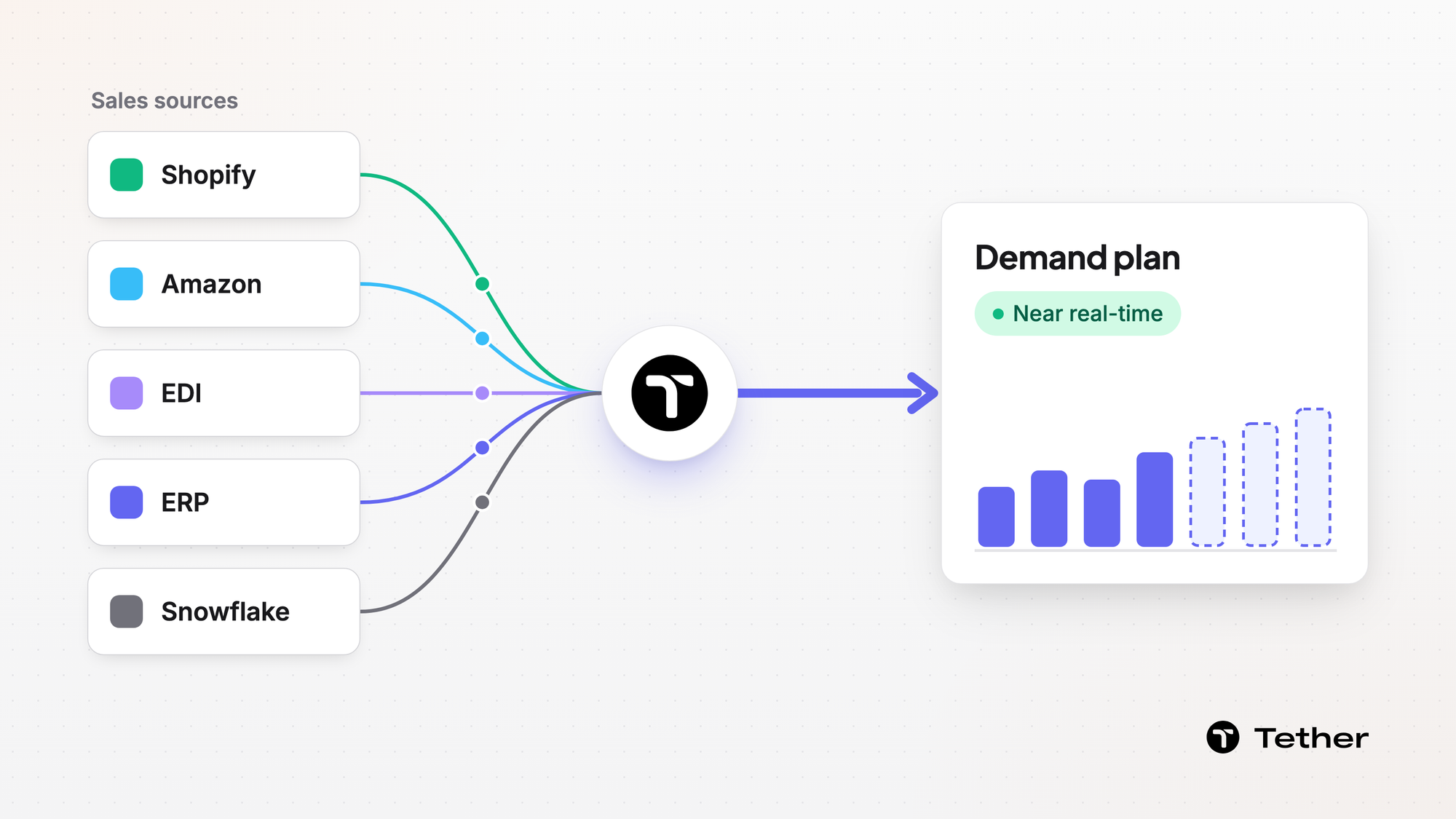
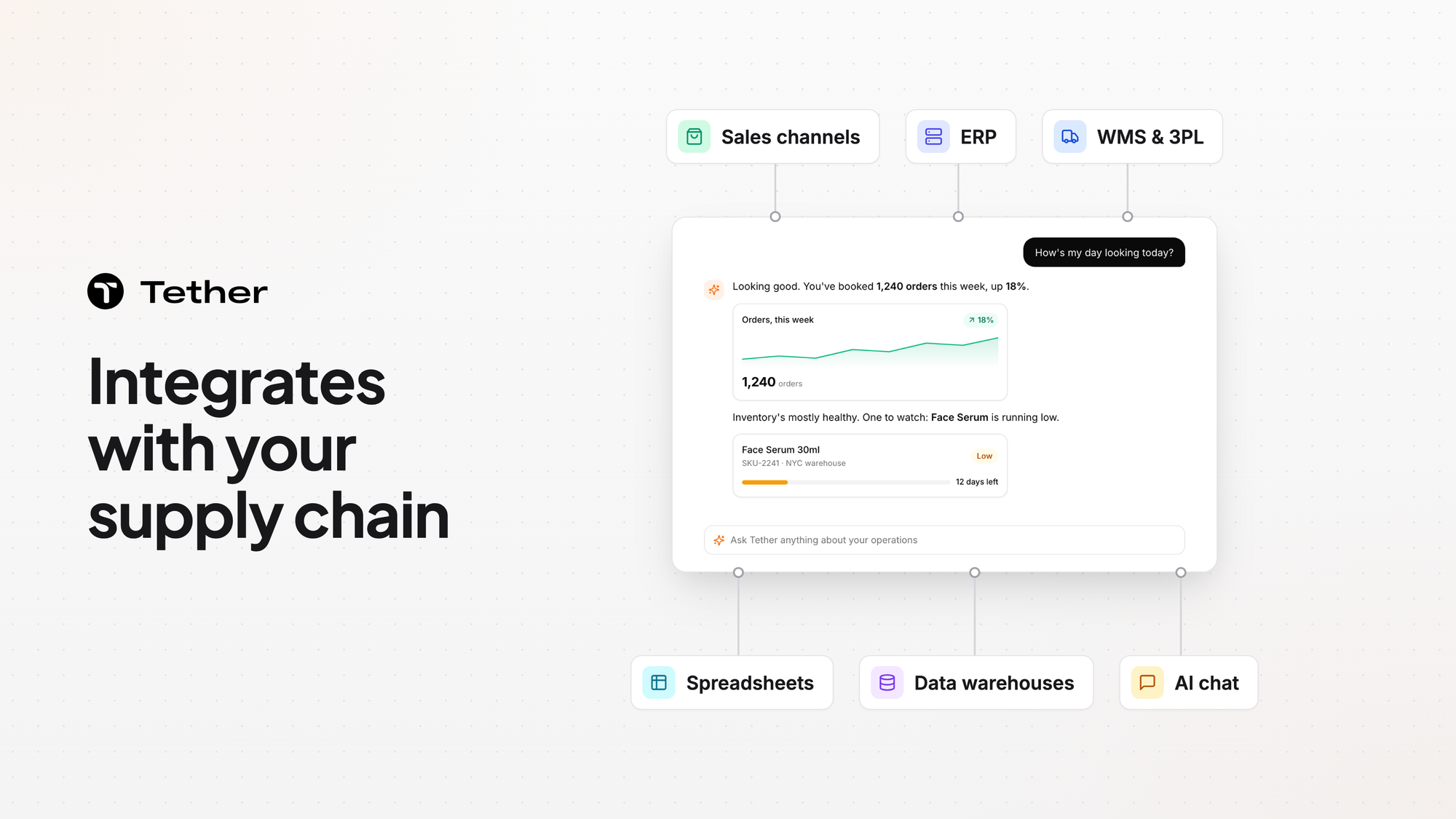
Tether pulls sales for demand planning from Shopify, Amazon, EDI, ERP, or data warehouses like BigQuery and Snowflake. Those sales numbers update near real-time with lightweight delta syncs.
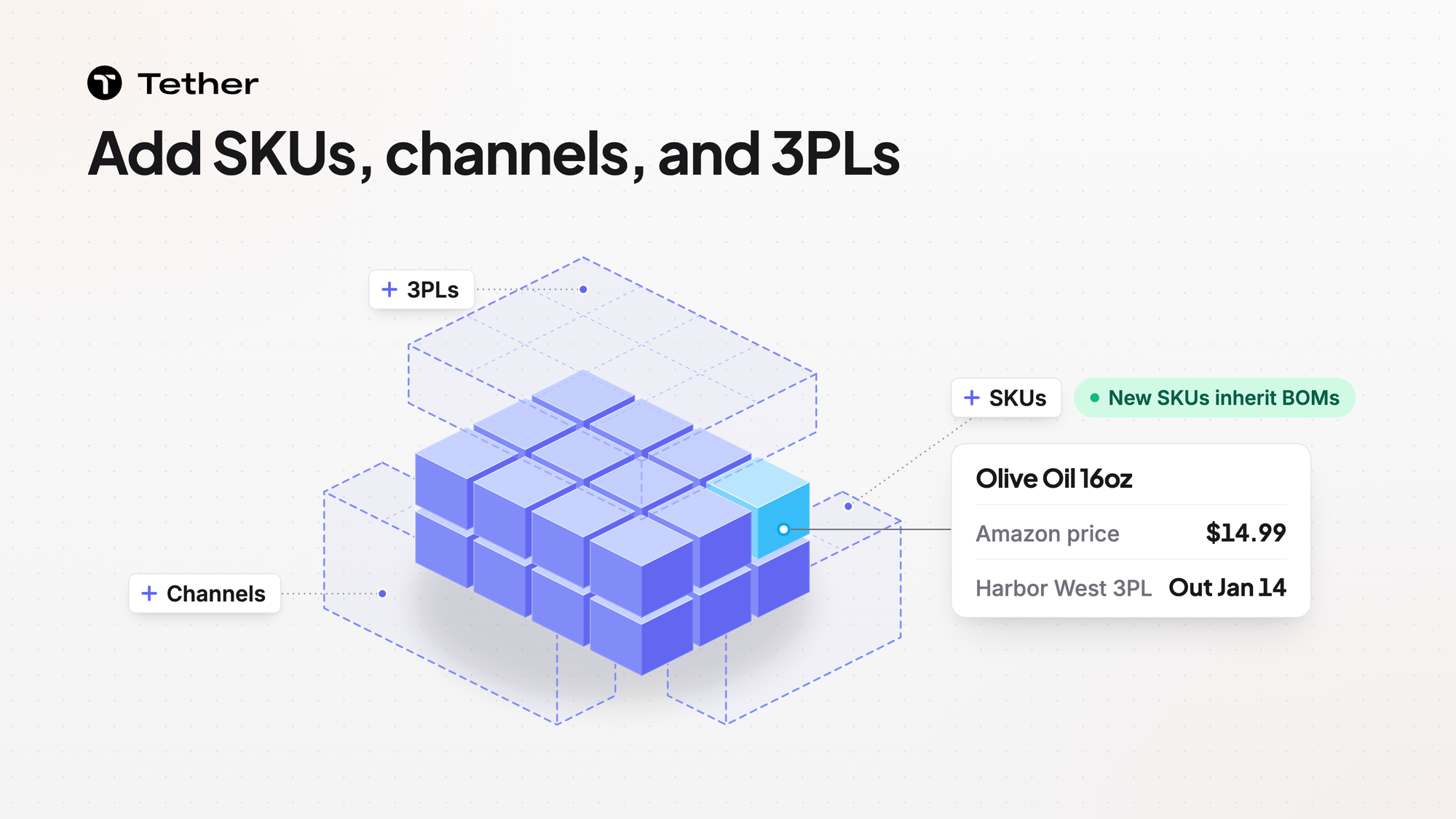
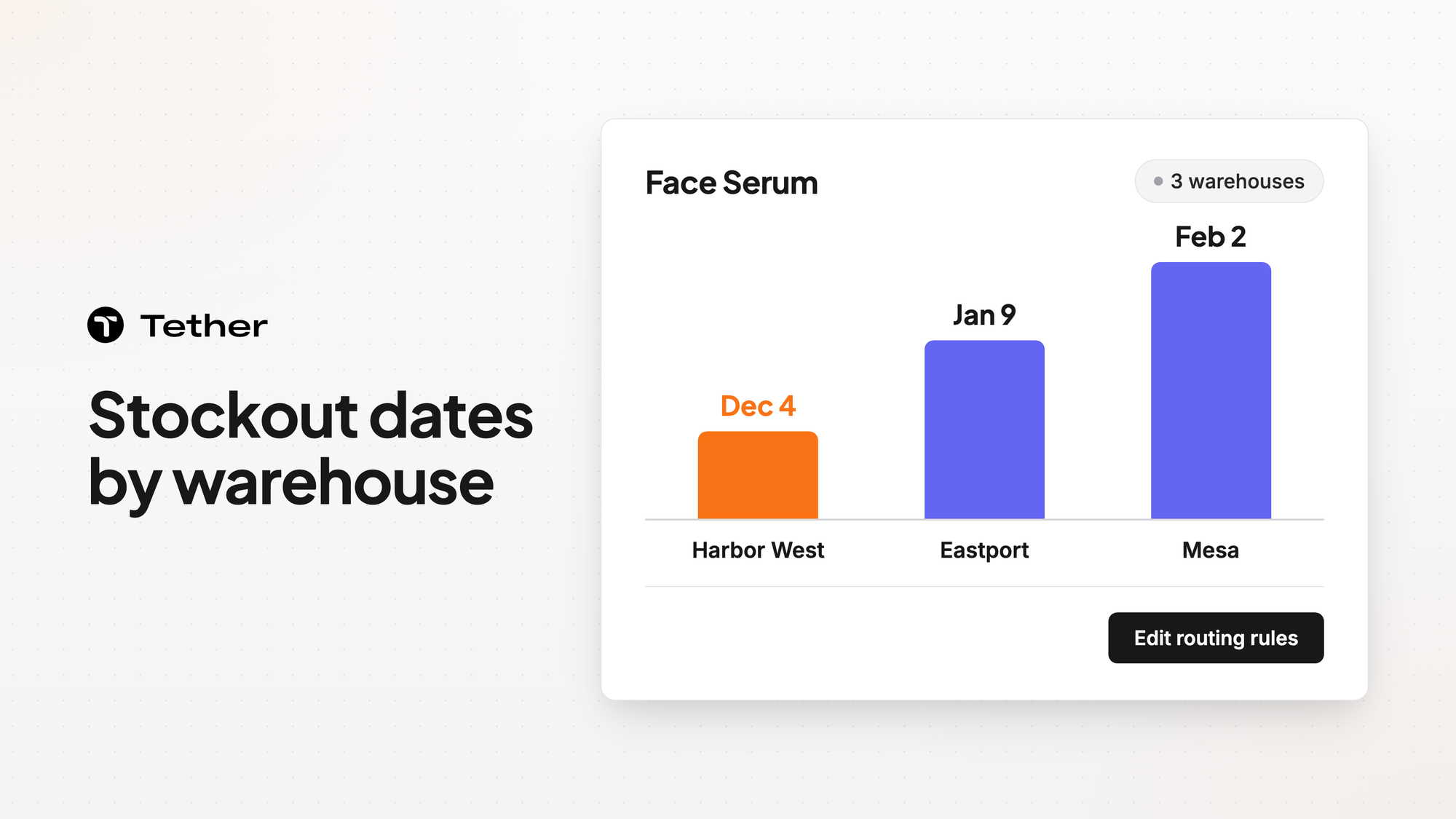
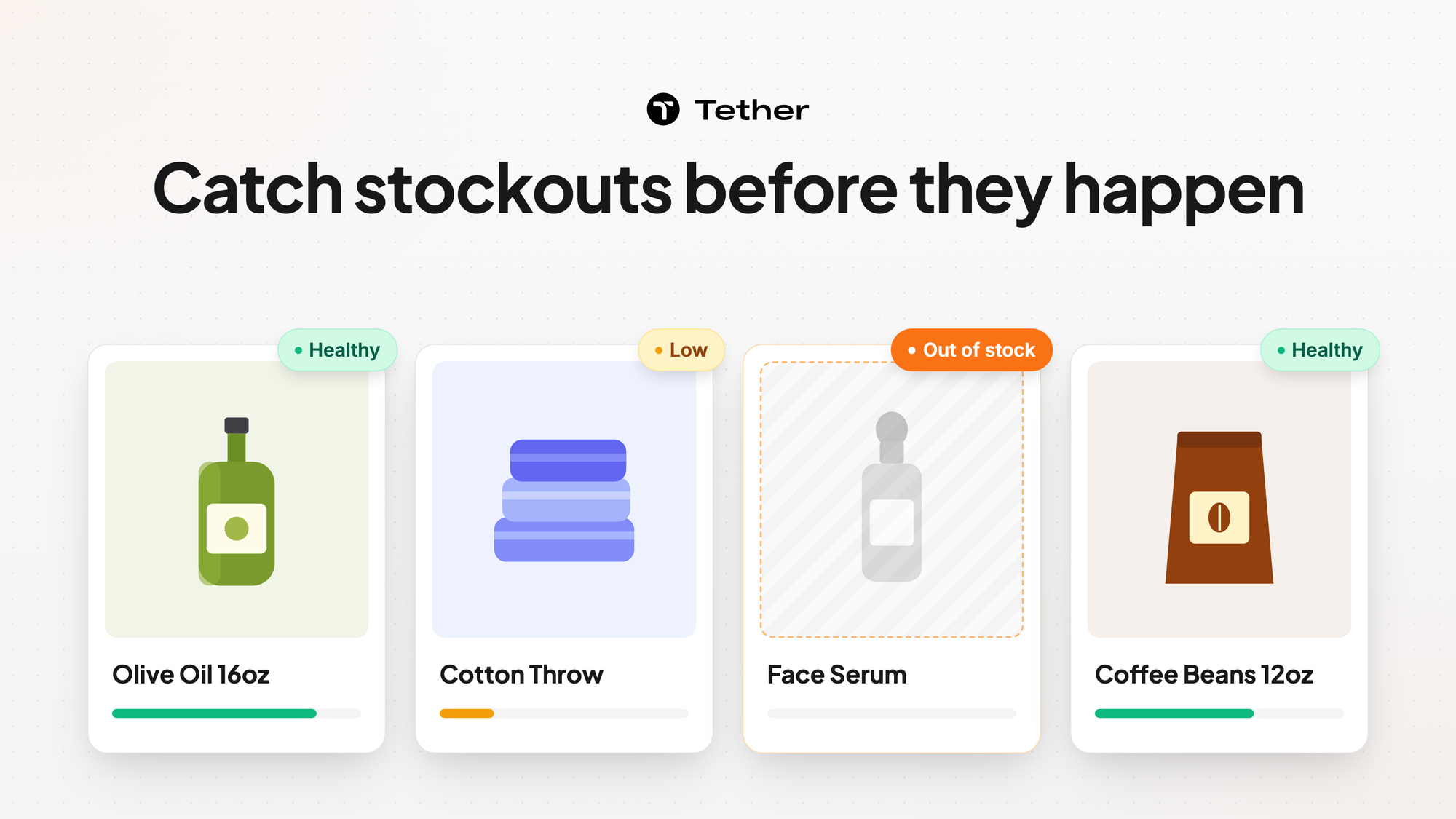
Tether predicts the stockout date per SKU per warehouse. New products inherit their BOM automatically as your catalog grows.
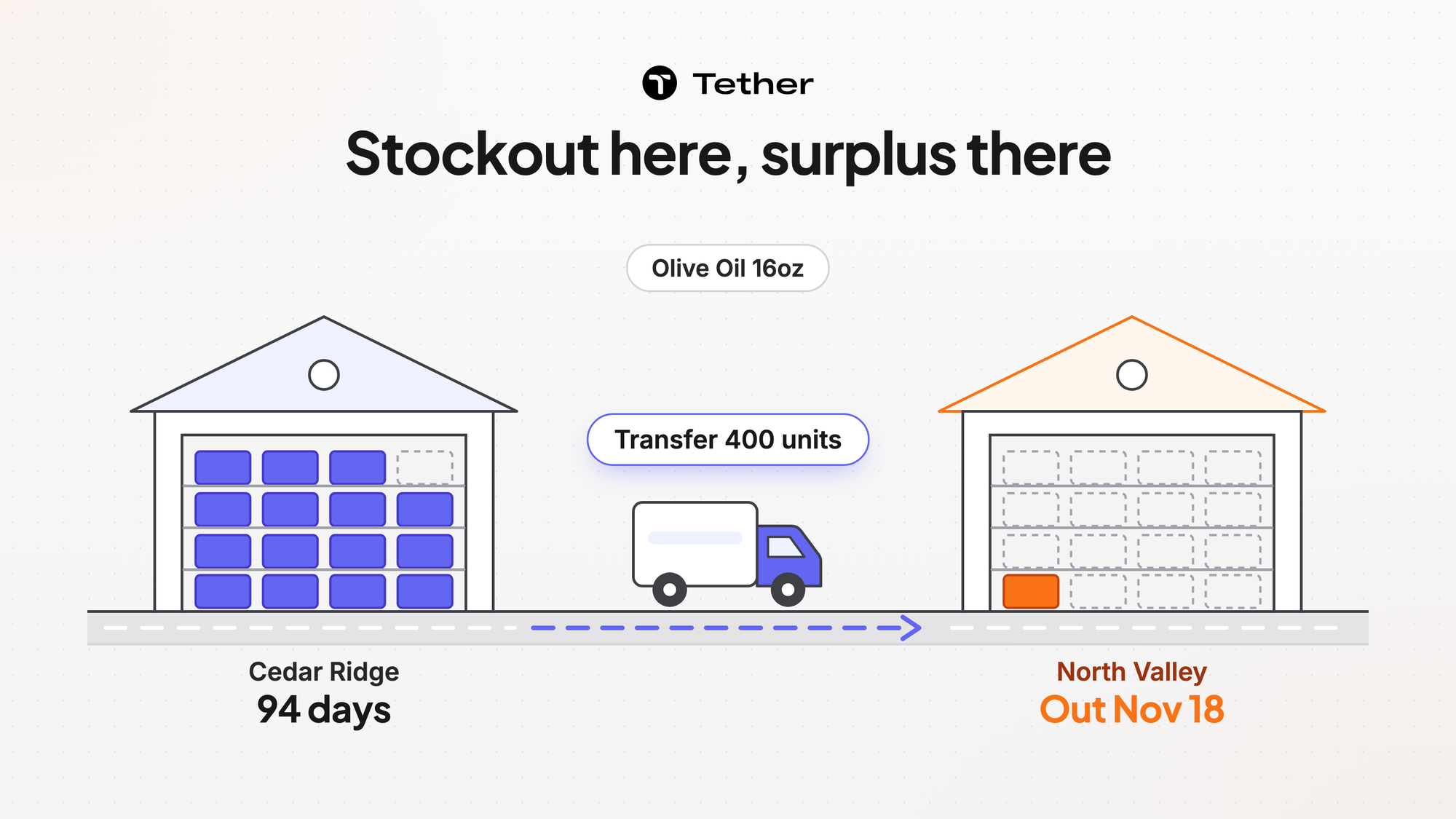
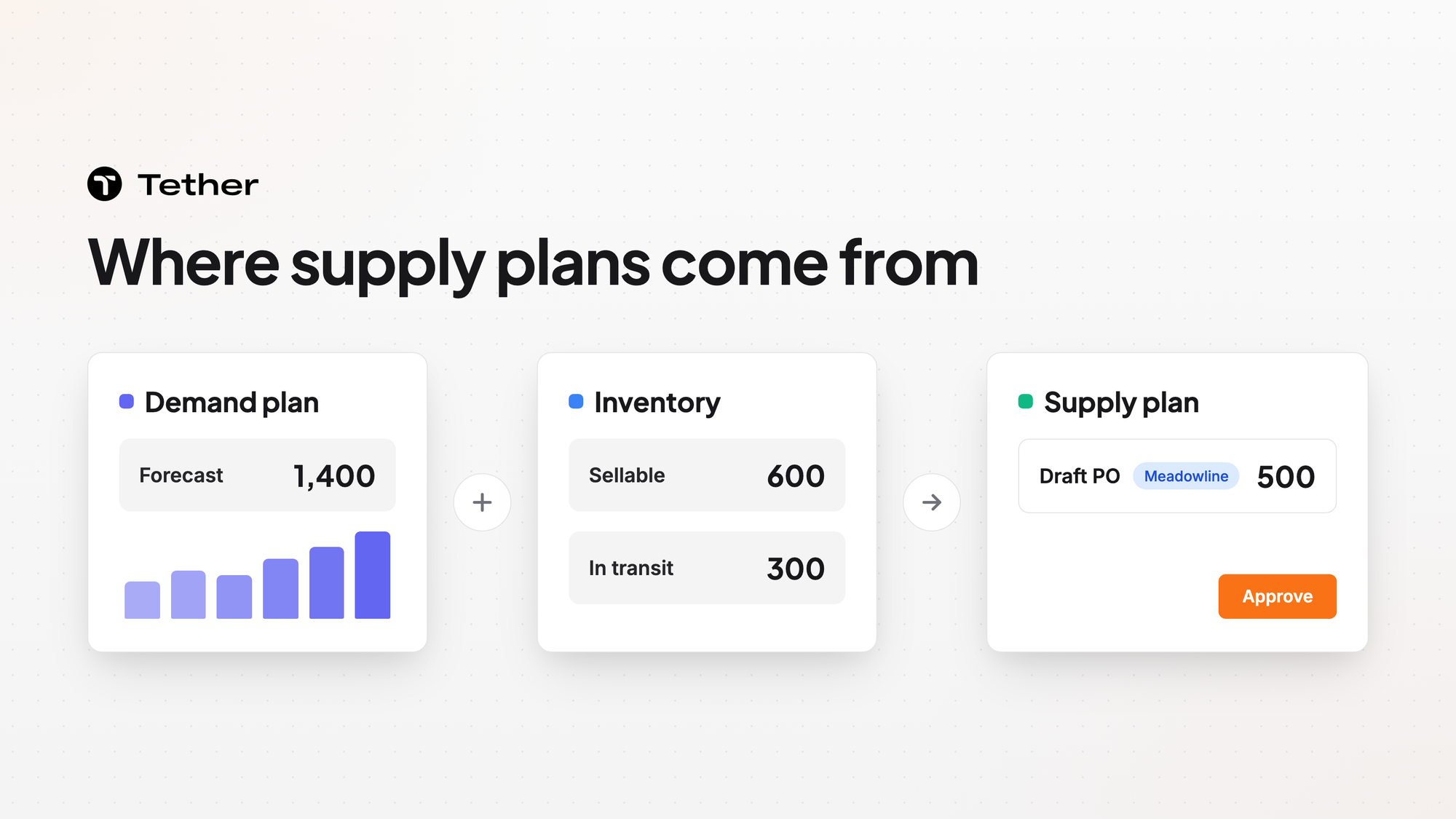
Tether predicts the stockout date for each SKU at each warehouse and recommends a purchase or transfer. It also recommends reducing or cancelling a purchase, production run, or transfer you no longer need. A recommendation becomes an order only when someone on your team places it.
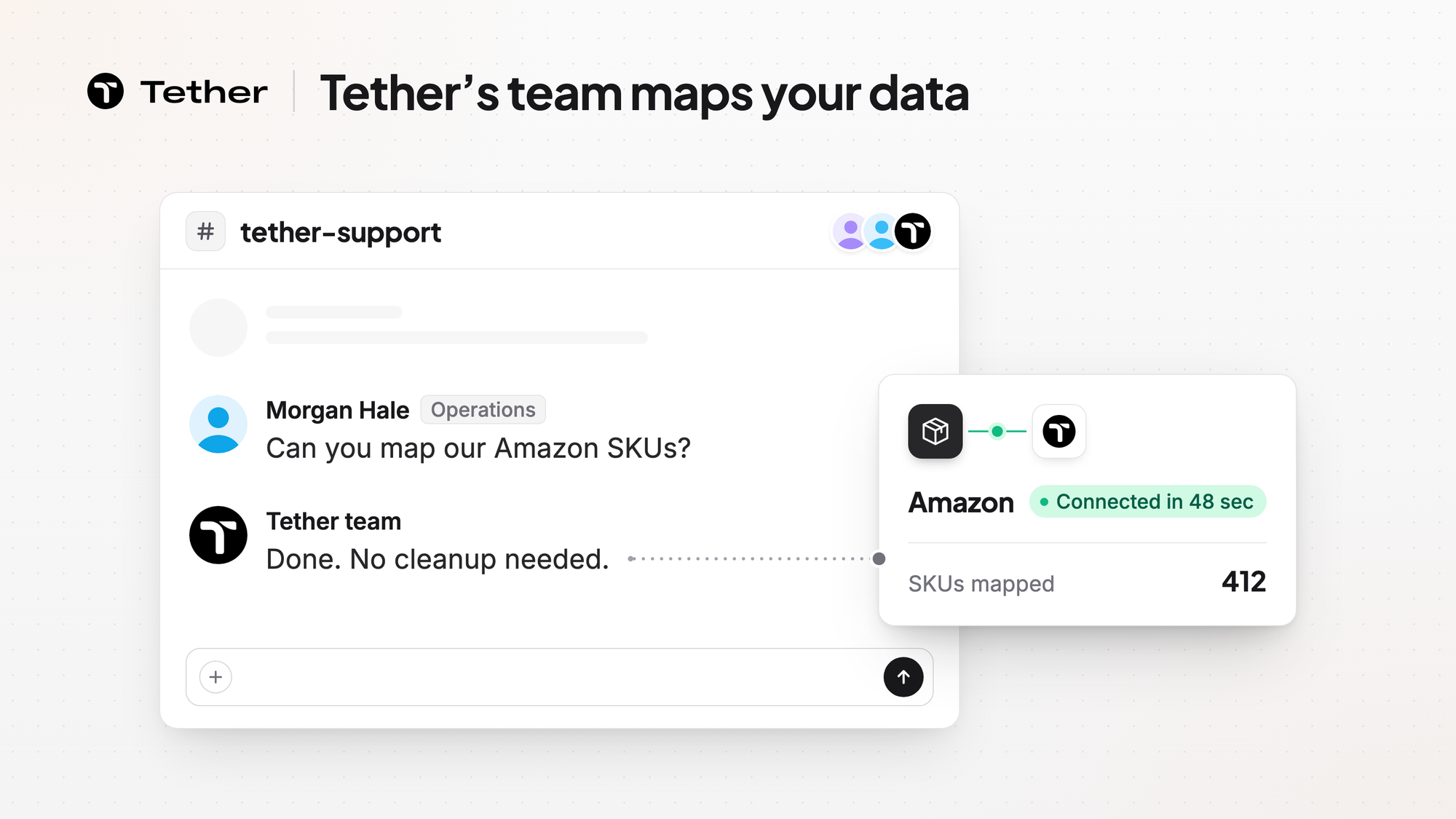
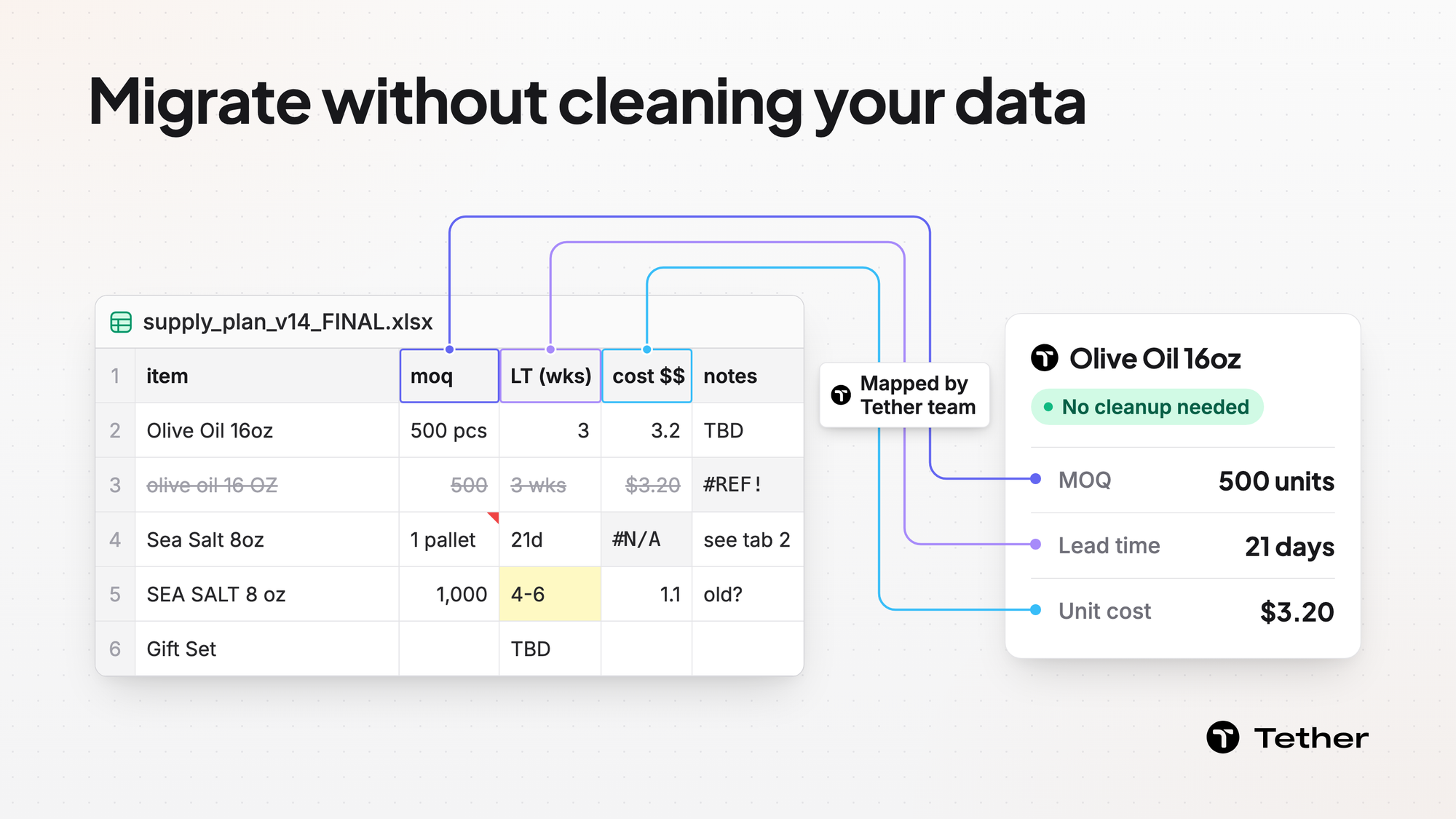
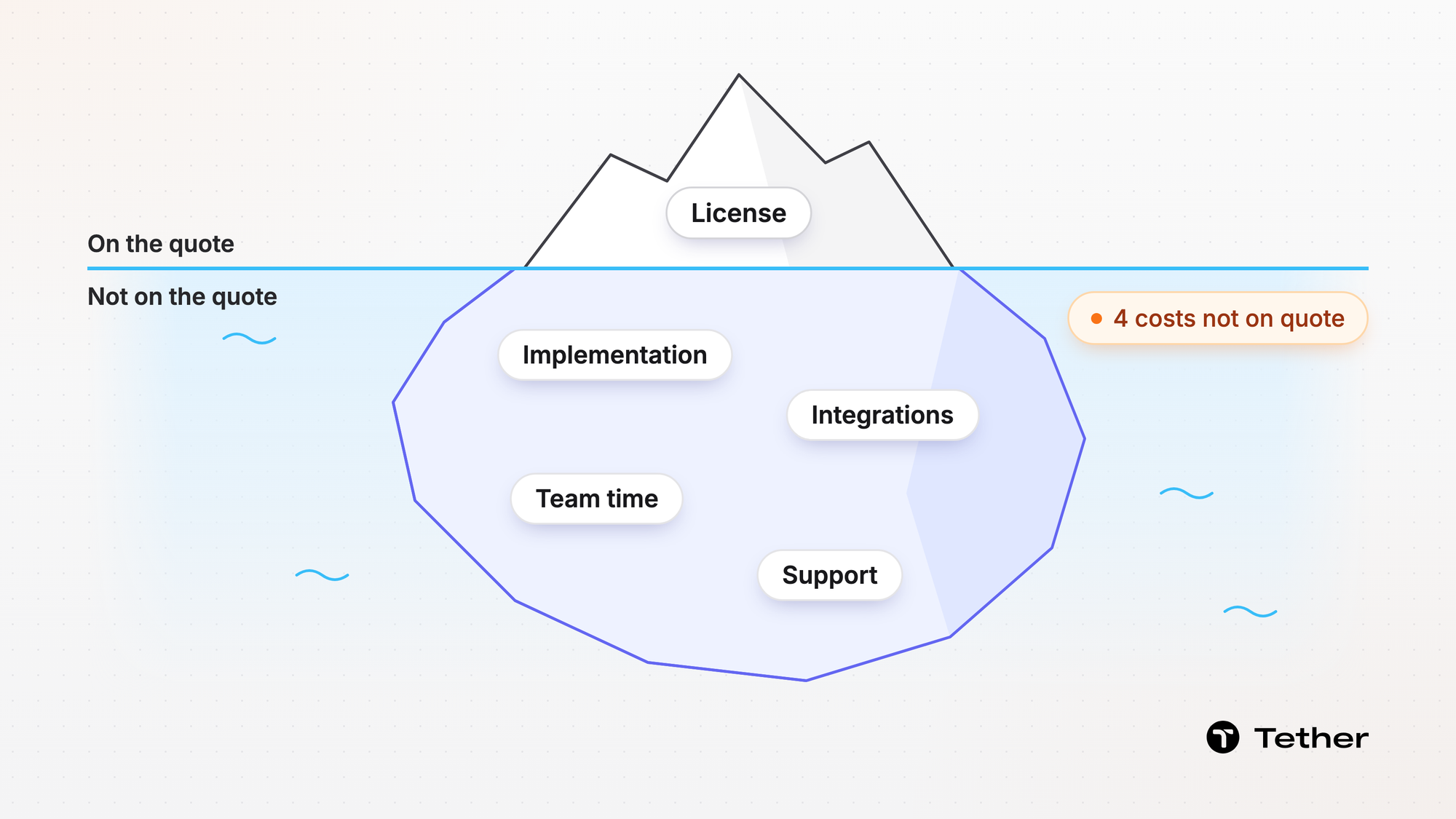
Tether's team connects your systems and handles the data migration and mapping for you during implementation. You do not need to clean your data first. Every plan includes a dedicated Slack channel or email for support, and urgent requests get a response within 24 hours.
Tether pulls sales for demand planning from Shopify, Amazon, EDI, ERP, or data warehouses like BigQuery and Snowflake. Those numbers update near real-time with lightweight delta syncs.
Tether covers the supply chain from demand forecasting to fulfillment. That includes supply planning, purchase orders, inventory, and production. Fishbowl is inventory and manufacturing software. Tether can replace Fishbowl or run on top of it as the planning layer.
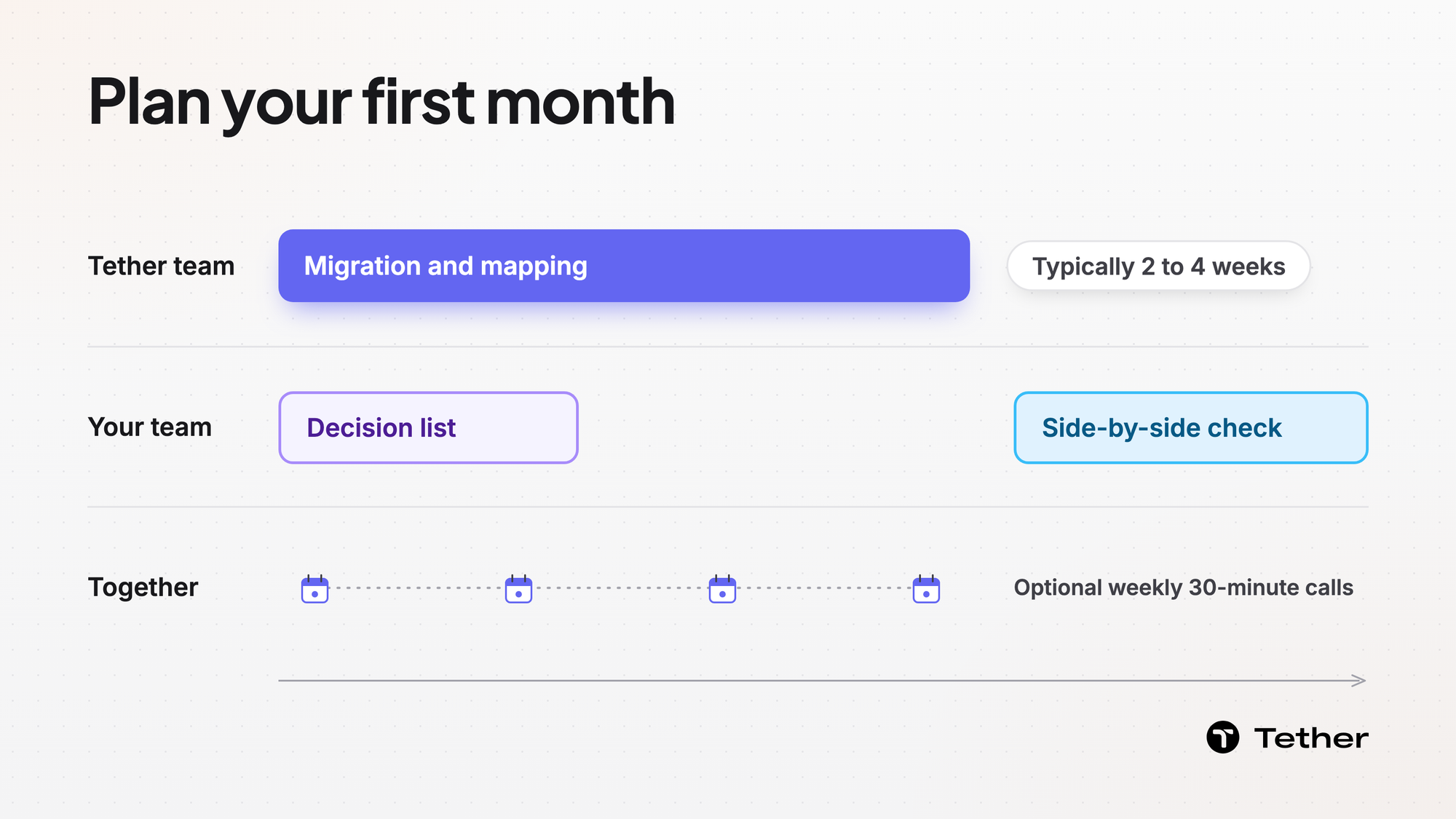
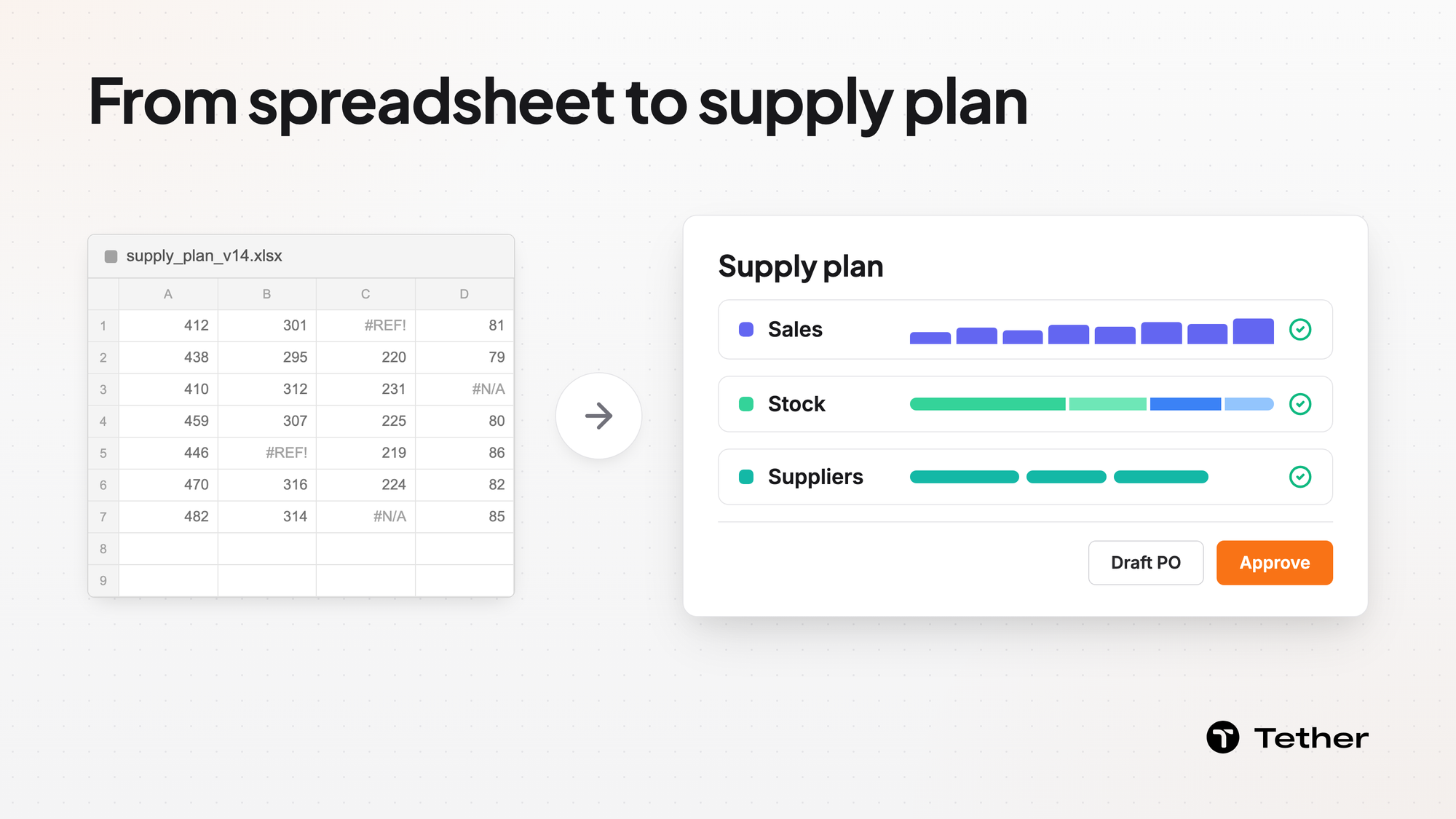
When you migrate supply planning data off spreadsheets, Tether's team handles the data migration and mapping, and no data cleaning is required. Implementation typically takes 2 to 4 weeks. Tether can run on top of the ERP you already have, and every purchase order arrives drafted.
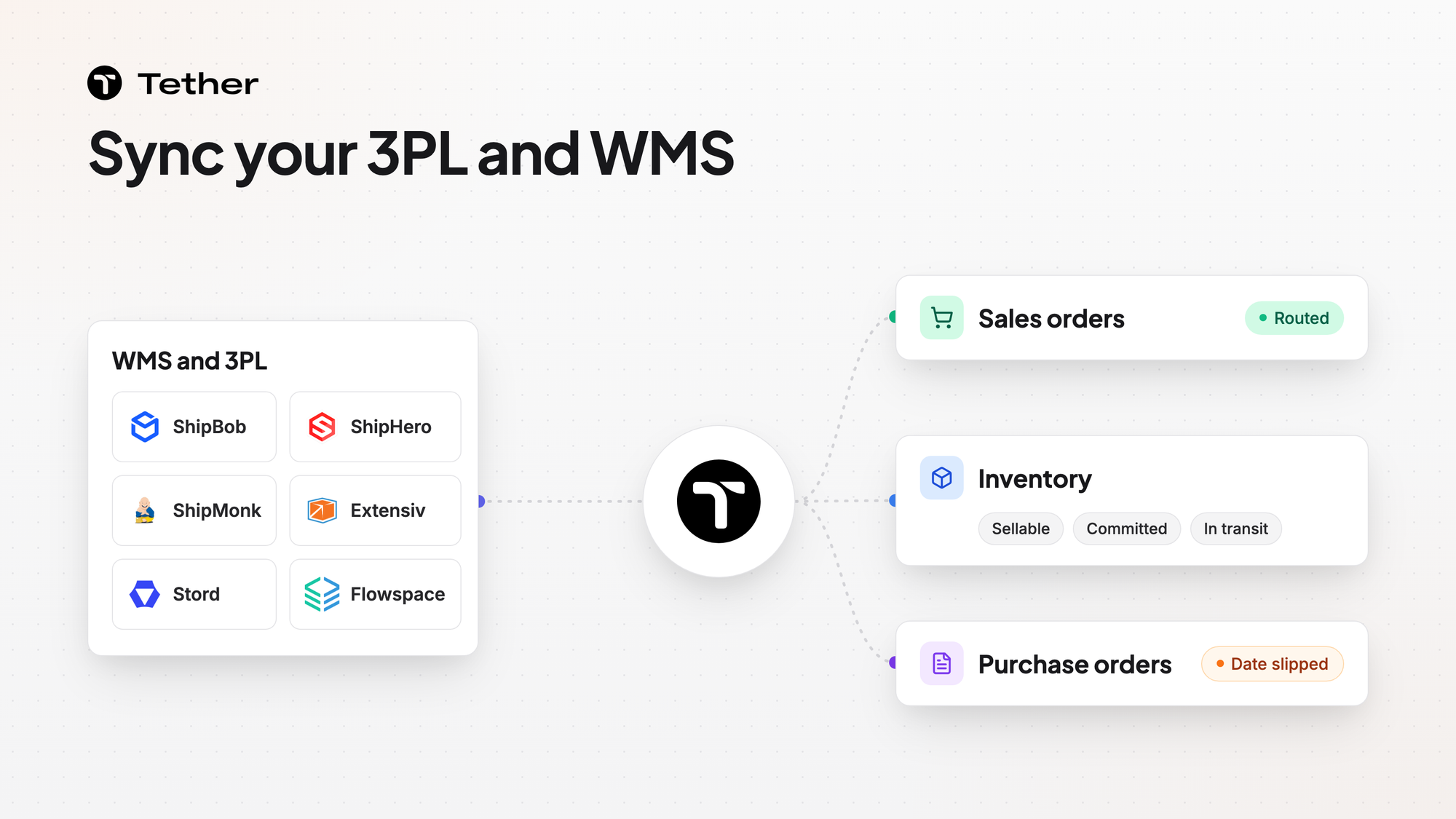
Tether predicts the stockout date for each SKU at each warehouse. It also tracks stock by state. Tether connects to the warehouses and 3PLs you already use and decides where each order goes under routing rules you build.
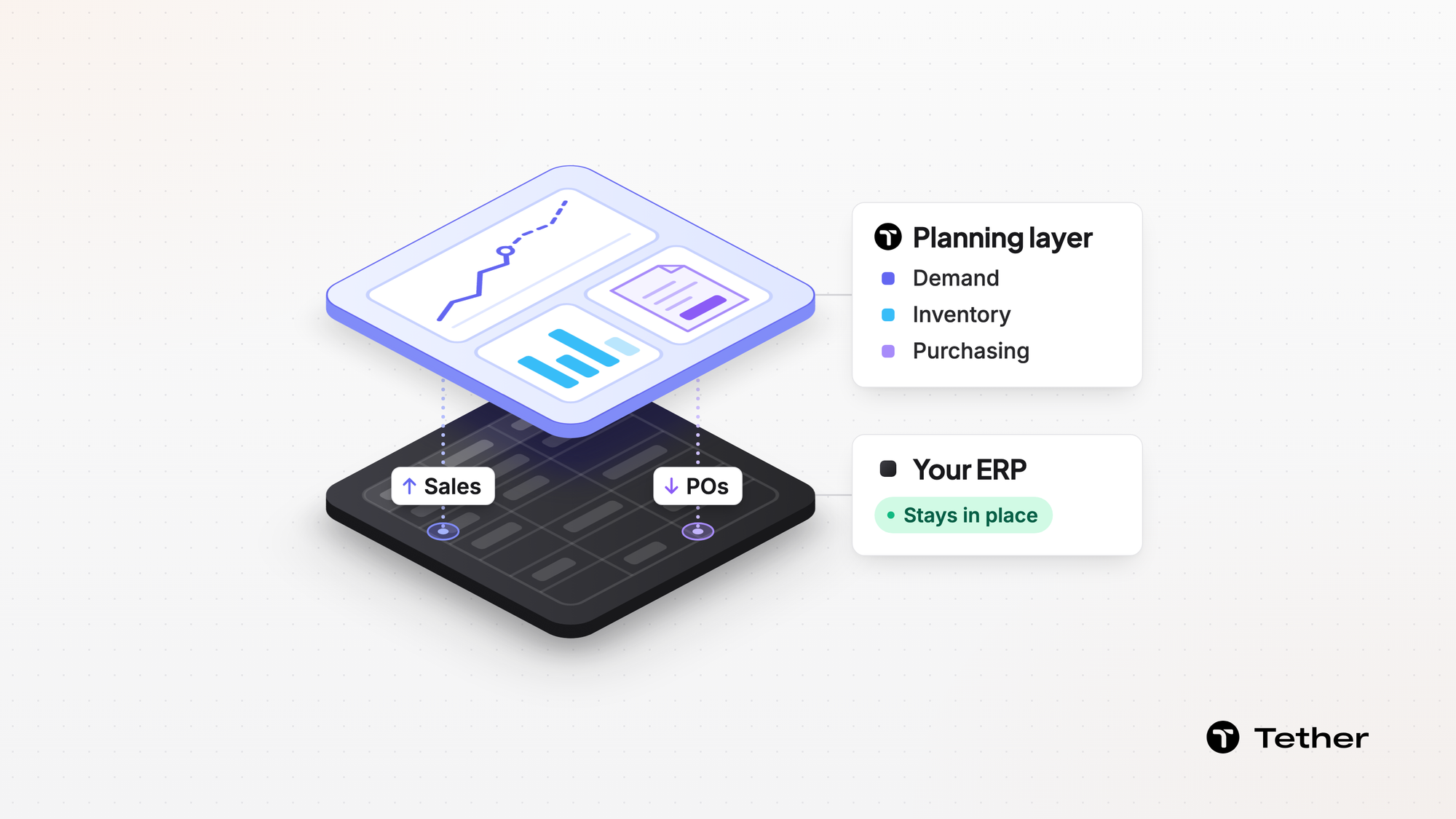
Tether can run as a planning layer on top of the ERP you already have. It pulls sales from your ERP and syncs purchase orders with it, and the Tether team handles the data migration and mapping.
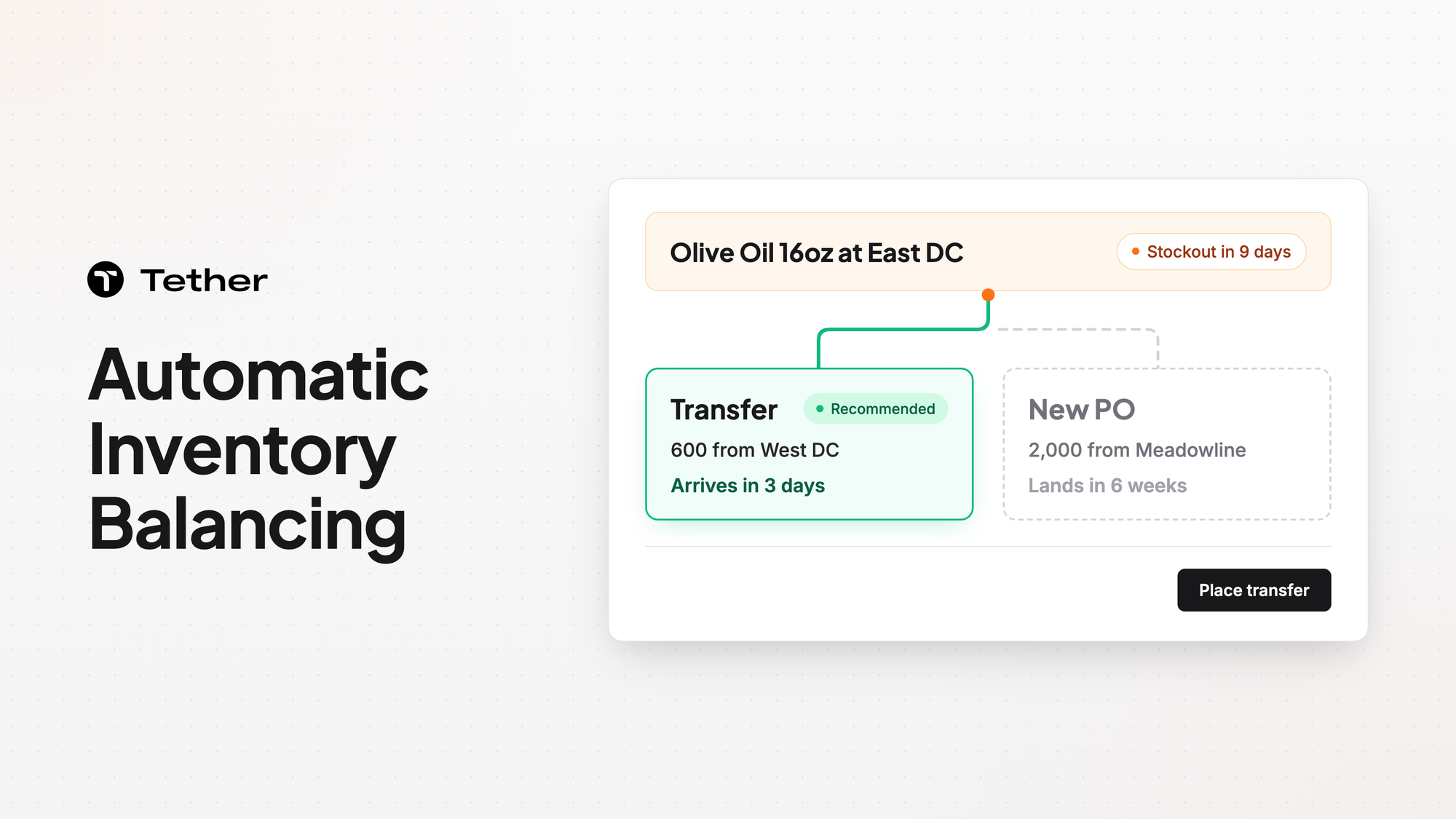
Tether predicts the stockout date and makes reorder and transfer recommendations for each SKU at each warehouse. A transfer fits when another warehouse holds sellable stock it can spare before the low one runs out. A new order fits when the whole network is short. Your team places the order.
Tether keeps lock-in low by working with the systems you already run. It can run on top of your existing ERP and WMS without replacing them. Tether AI maps your data as-is. If you leave, Tether exports your data within 30 days and confirms in writing that it has been deleted.
Tether connects to the warehouses and 3PLs you already use, and your 3PL or WMS still runs the floor. Tether routes sales orders to the right warehouse, tracks stock by state, and follows every purchase order until it is delivered.
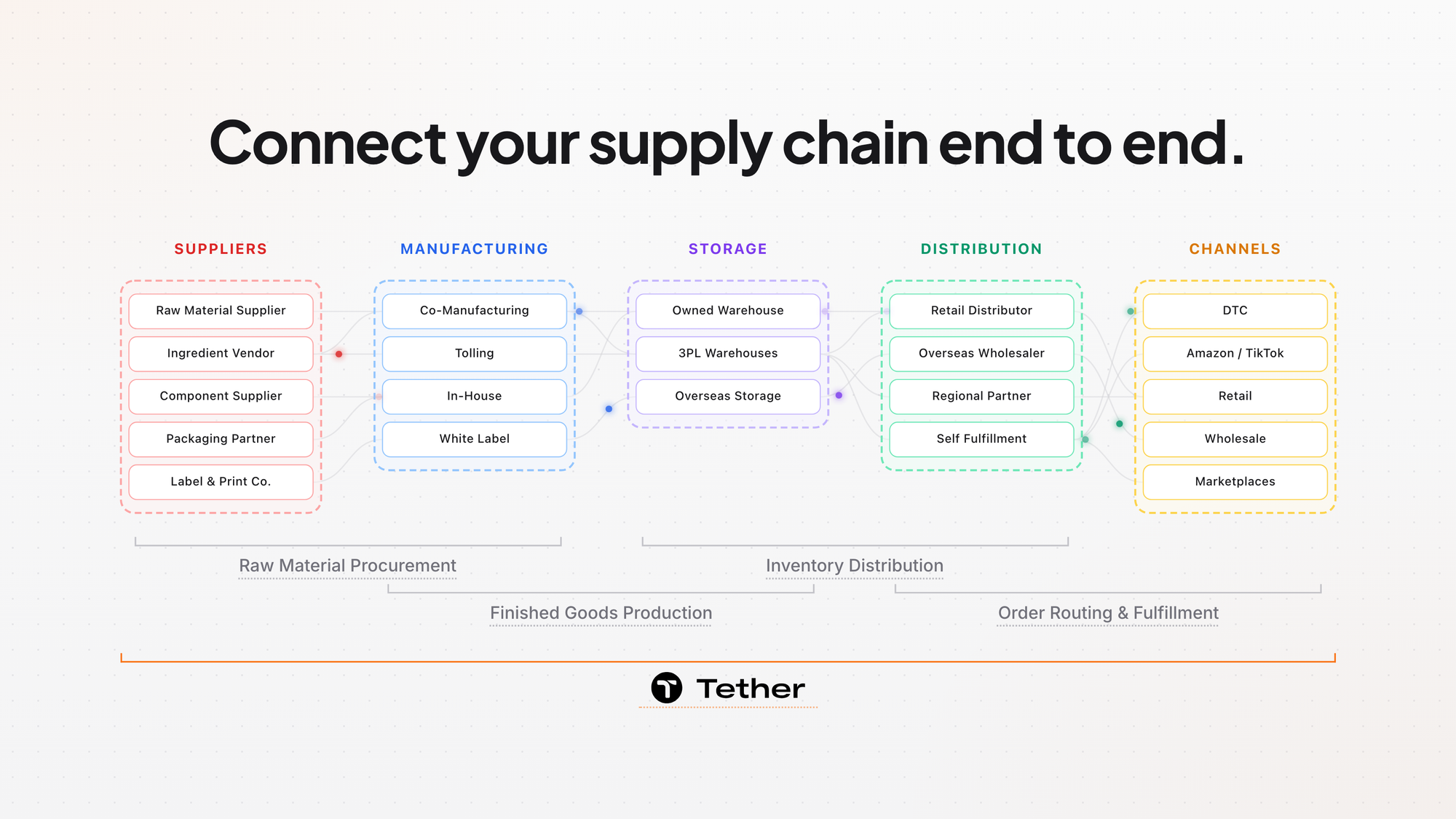
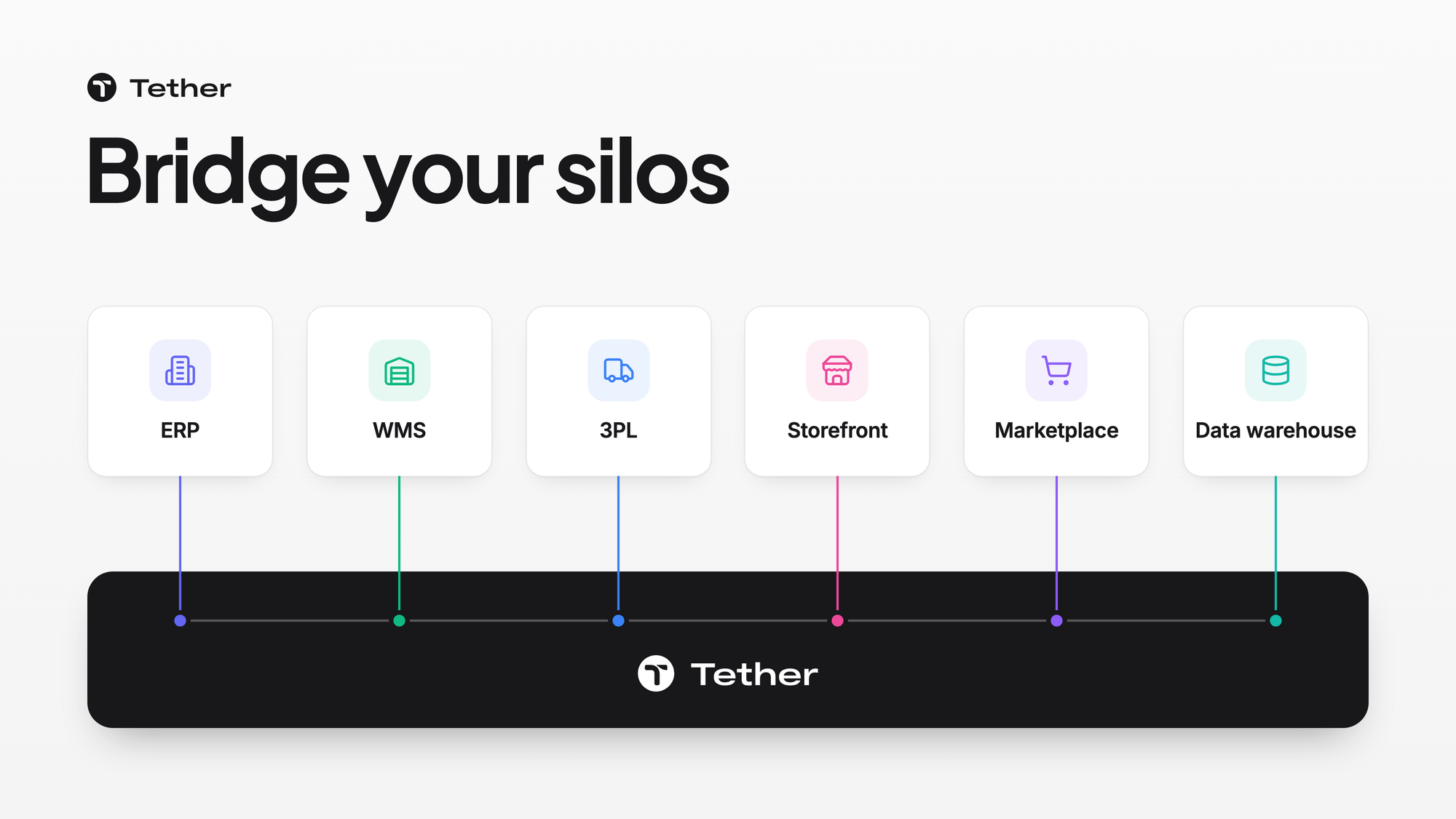
Tether connects to the systems your brand already runs. You can unify data from your ERP, warehouse and inventory systems, retail channels, spreadsheets, partner portals, and more. The integrations page lists 260+ integrations.
Tether charges no usage, per-user, data, or onboarding fees, and every plan includes a dedicated Slack channel or email for support.
Tether's implementation typically takes 2 to 4 weeks. Tether's team does the data migration and mapping for you with no data cleaning required.
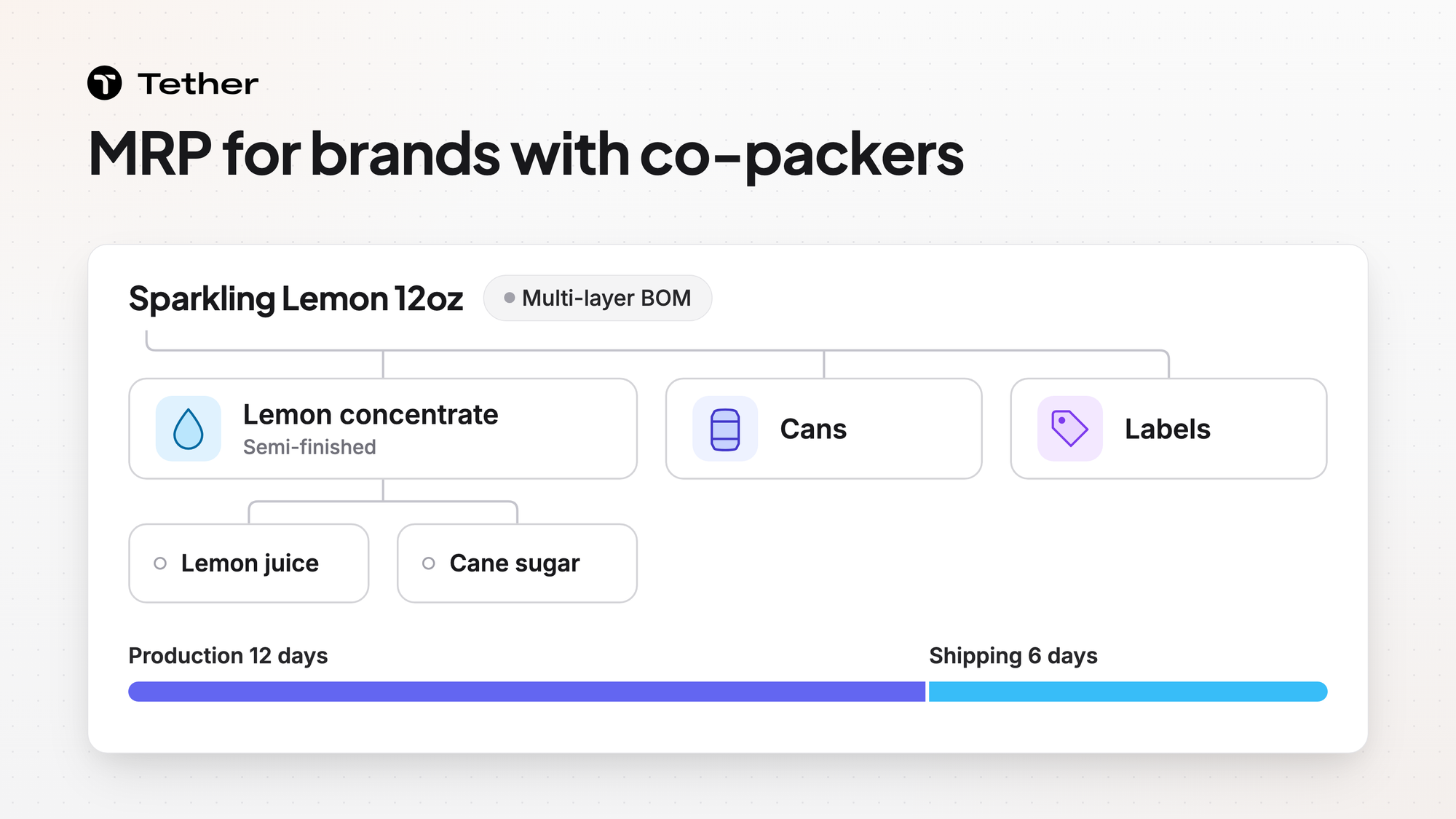
MRP (material requirements planning) uses each product's bill of materials to work out which raw materials, packaging, and components you need and when. A consumer brand with co-packers needs MRP when it buys some inputs itself and sends them to the co-packer.
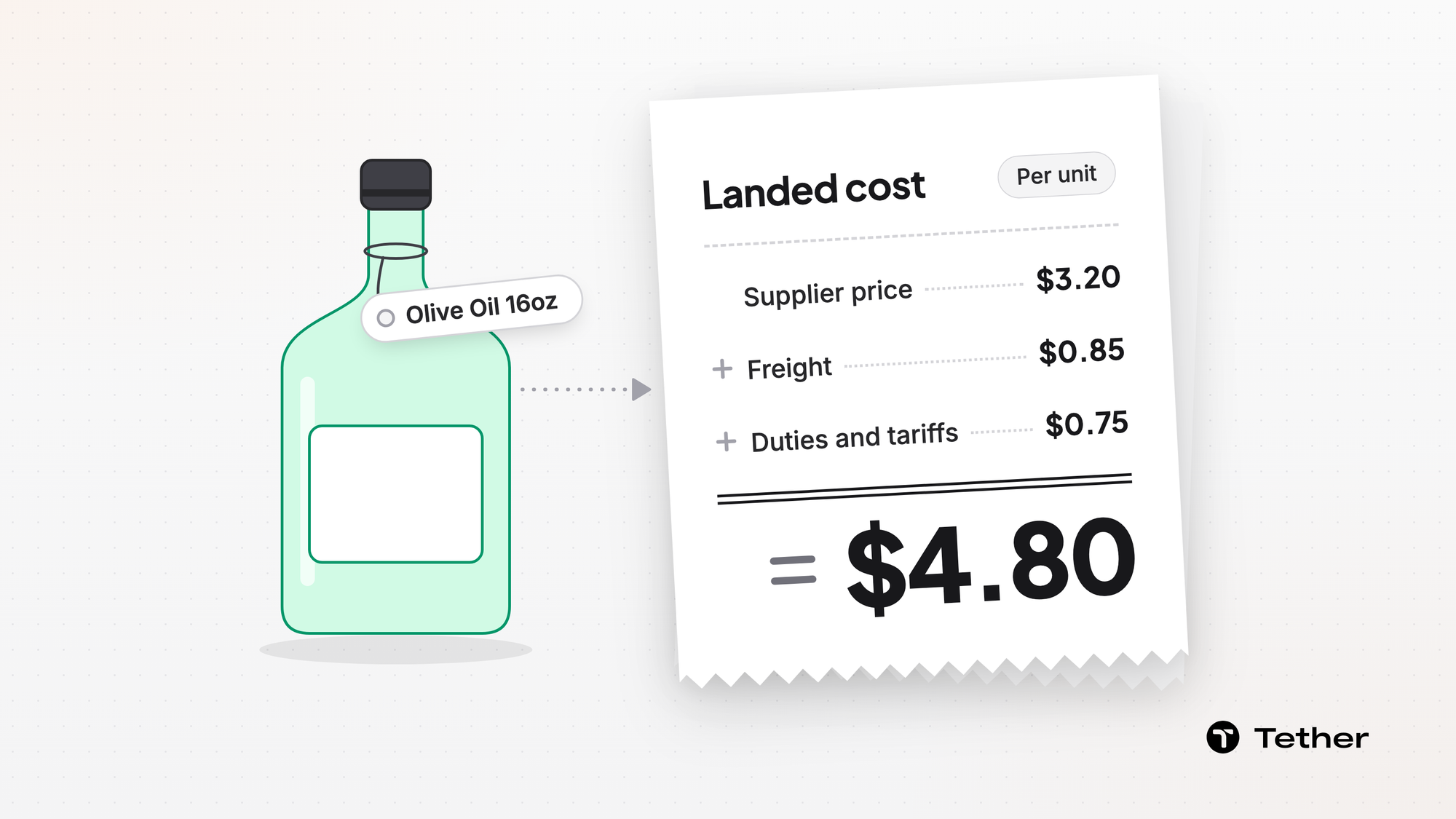
Landed cost is the supplier price of a unit plus the cost of bringing it in. Tether calculates per-unit landed cost with freight, duties, and tariffs.
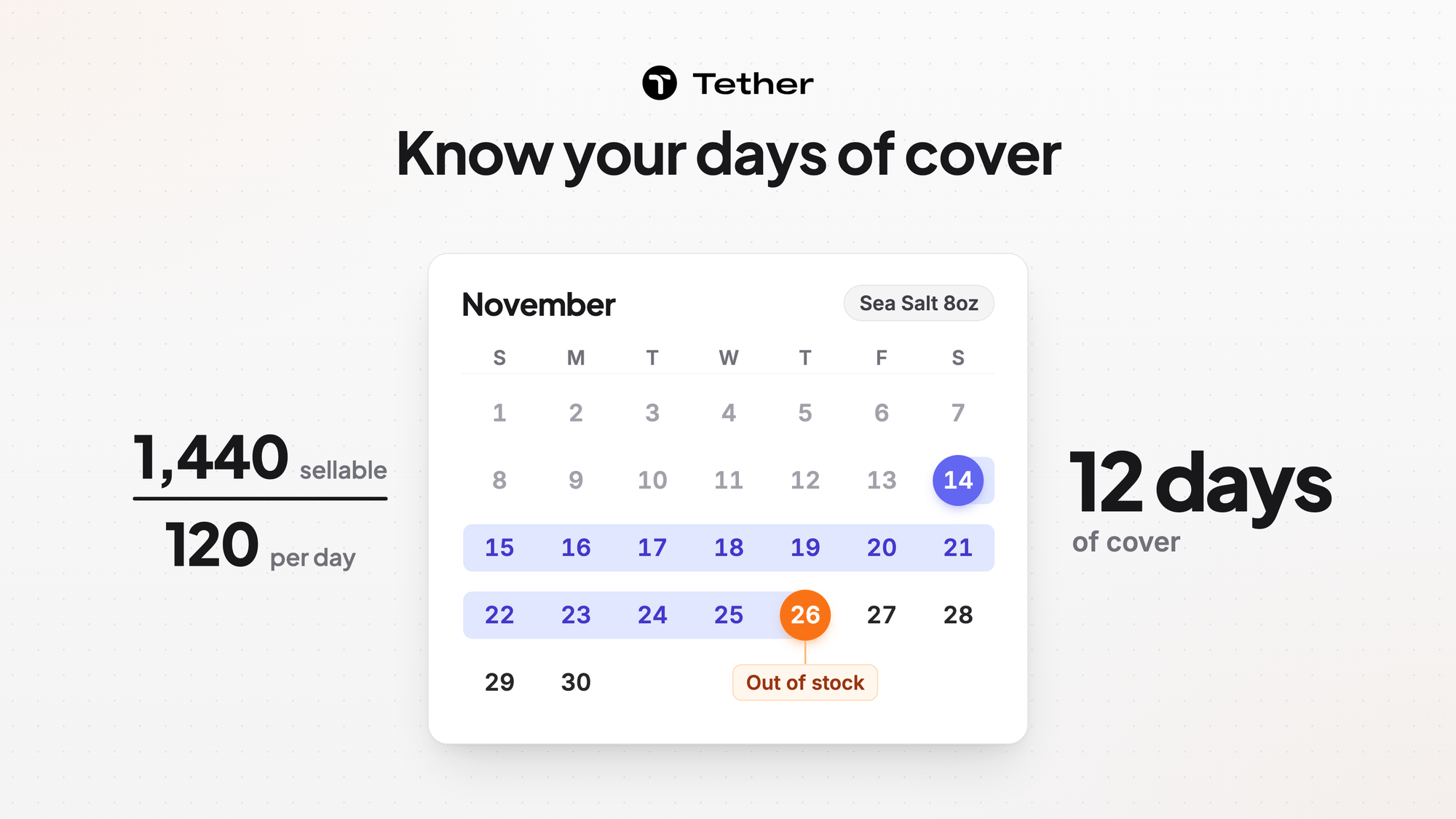
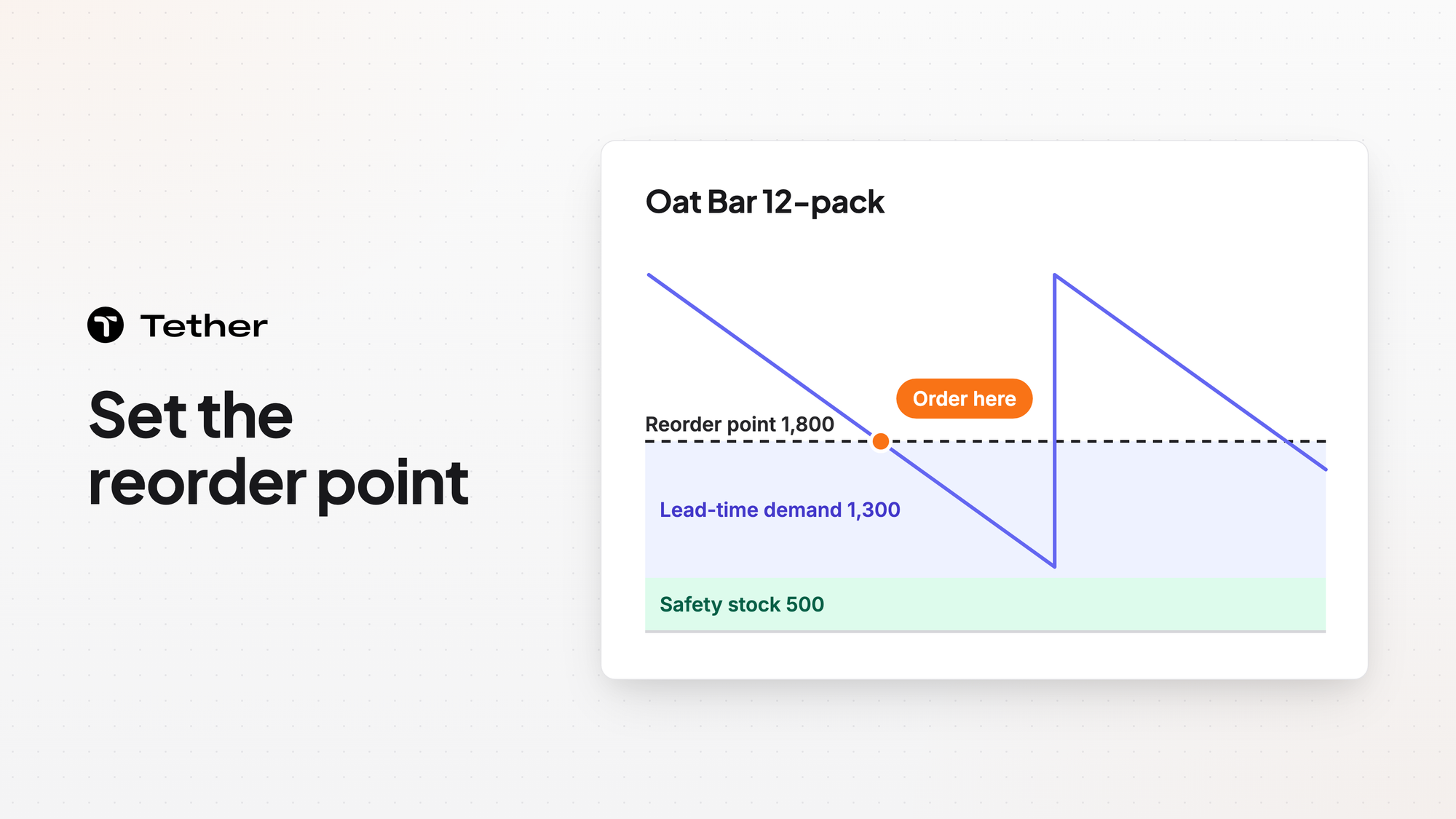
Days of cover is the number of days of stock you have left. Tether drafts a purchase order the moment your coverage hits your reorder point. It also predicts the stockout date per SKU per warehouse.
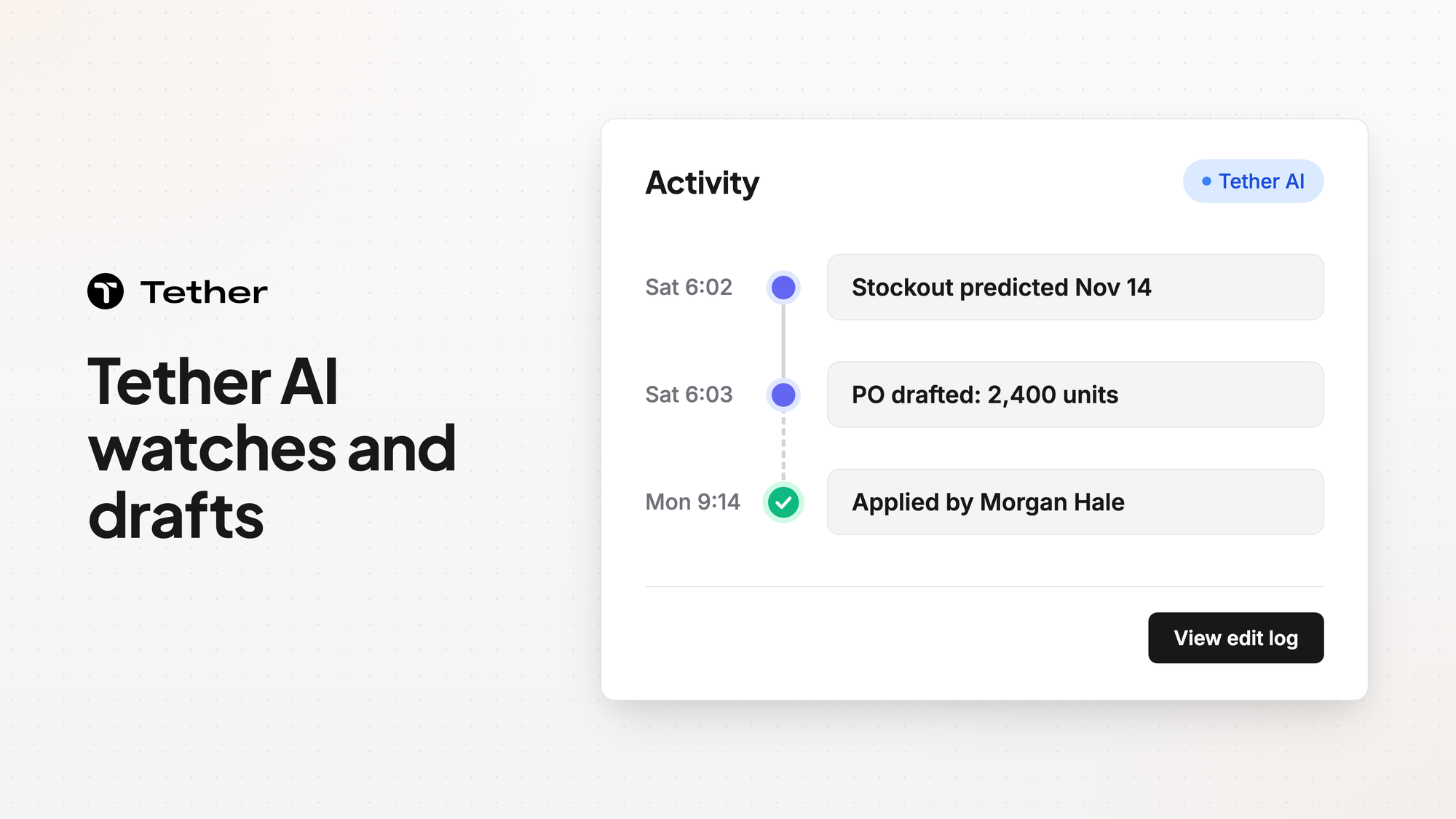
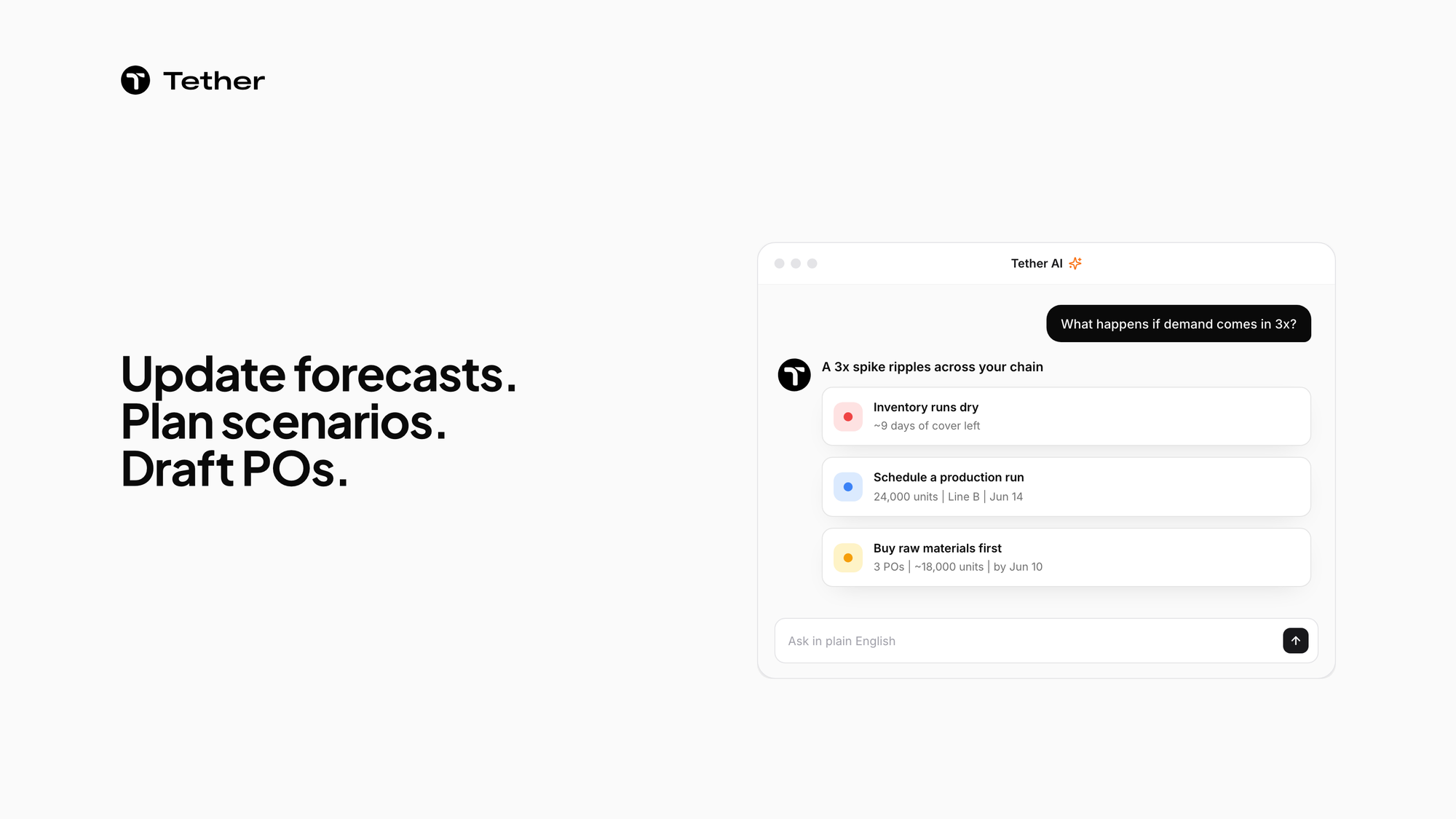
Tether includes an in-house supply chain teammate called Tether AI. It watches inventory and drafts POs and other changes. In the Tether app, your team chooses which drafted changes to apply. Each applied change goes into a visible edit log.
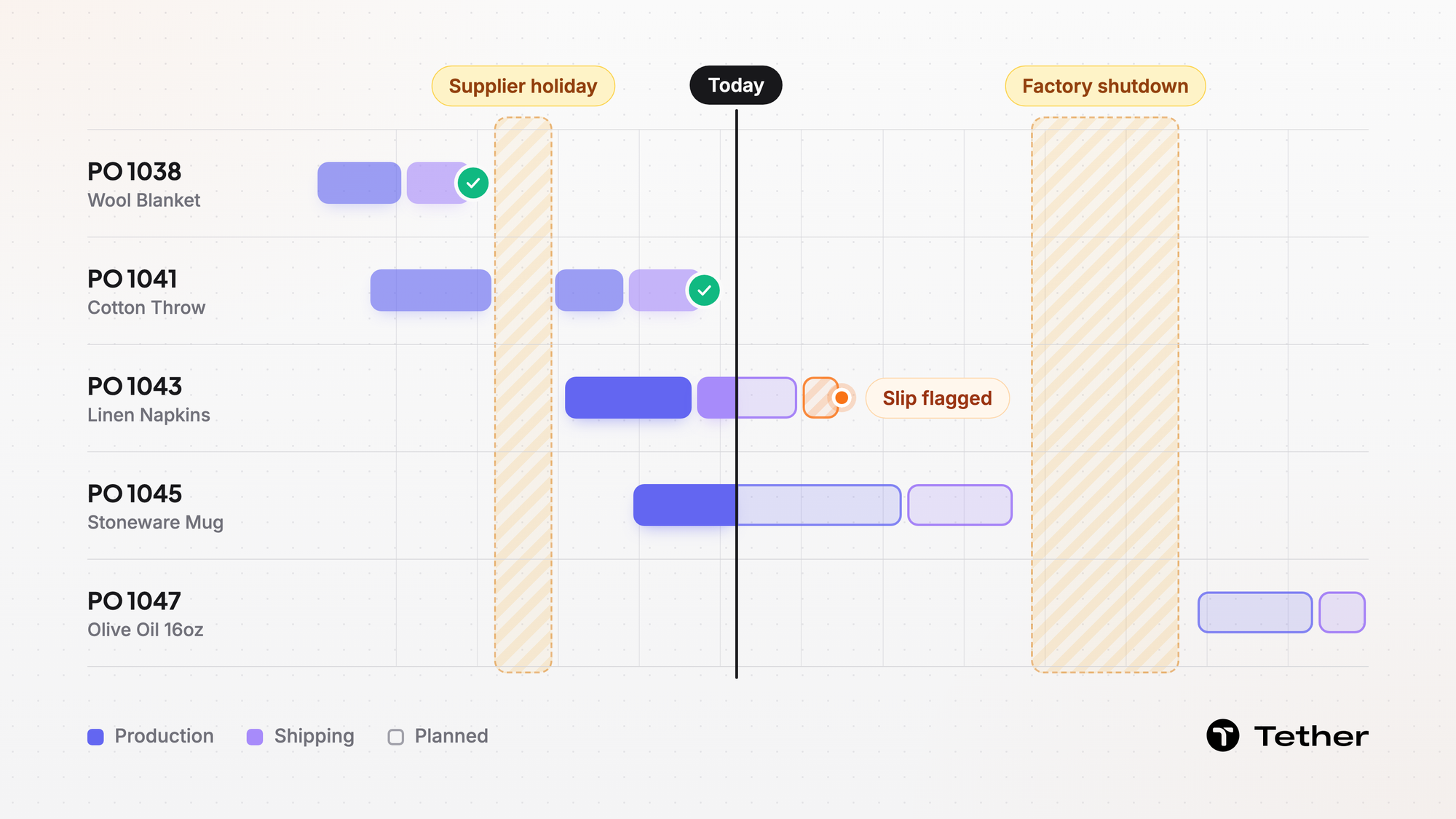
You plan purchase orders around supplier holidays and factory shutdowns by ordering ahead of each closure on lead times your suppliers actually hit. Tether lets you plan around supplier holidays so a closure never catches you off guard.
Demand planning in Tether pulls your sales data to estimate what customers will buy and when. Supply planning in Tether drafts purchase orders that respect supplier minimums and lead times.
Tether flags you the moment a supplier delivery date slips, long before it becomes a stockout. It predicts the stockout date for each SKU at each warehouse and recommends a purchase or transfer when it sees one coming.
Tether's Slack connector lets you talk to Tether AI in the app your team already lives in. Ask about demand, inventory, purchase orders, or costs in plain English and get the answer in Slack without opening Tether.
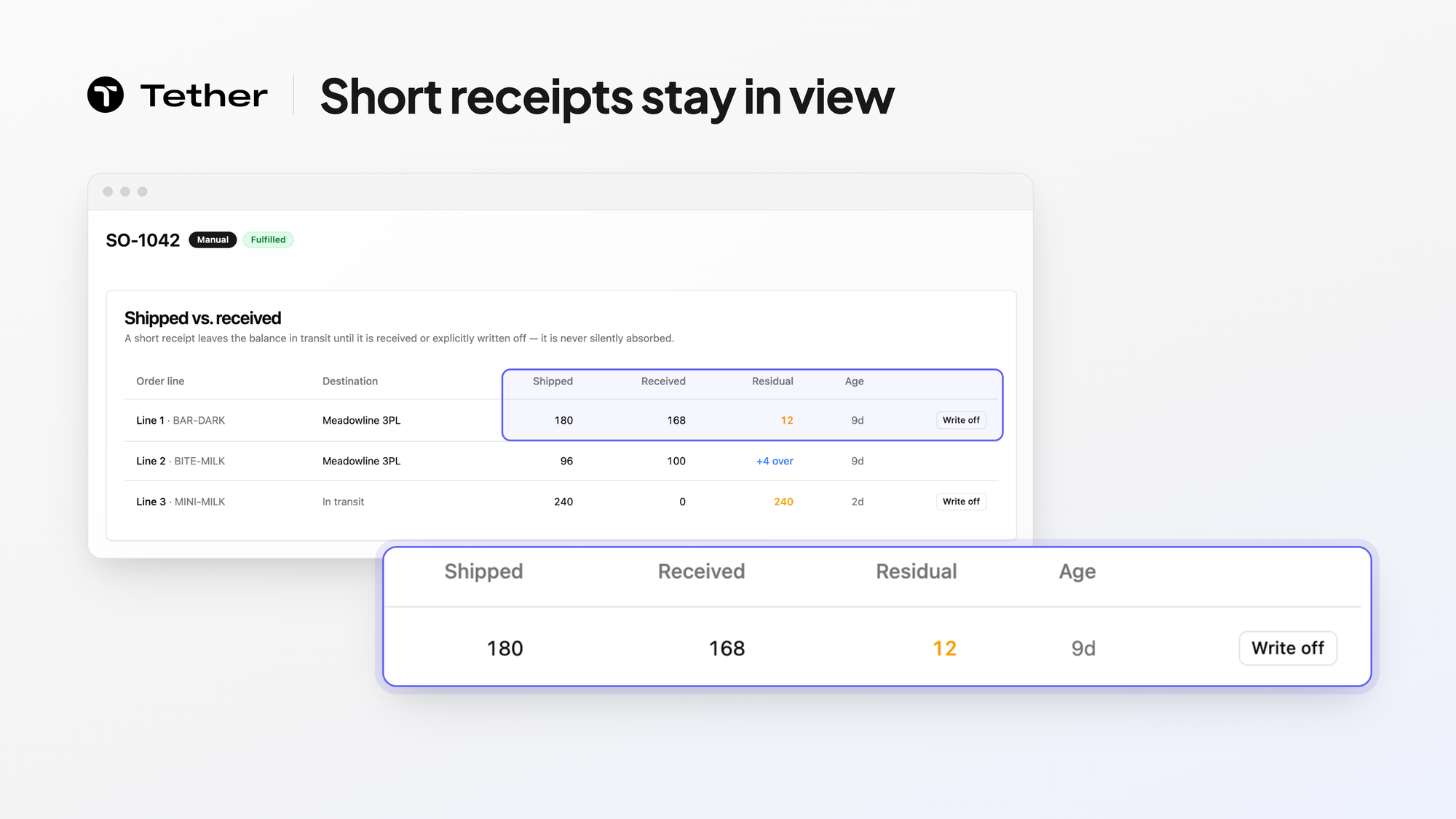
Tether shows shipped versus received on the sales order itself. The Shipped vs. received card lists each order line that has a residual or an over-receipt, with its shipped, received, and residual quantities, the destination where receipts landed, and the residual's age.
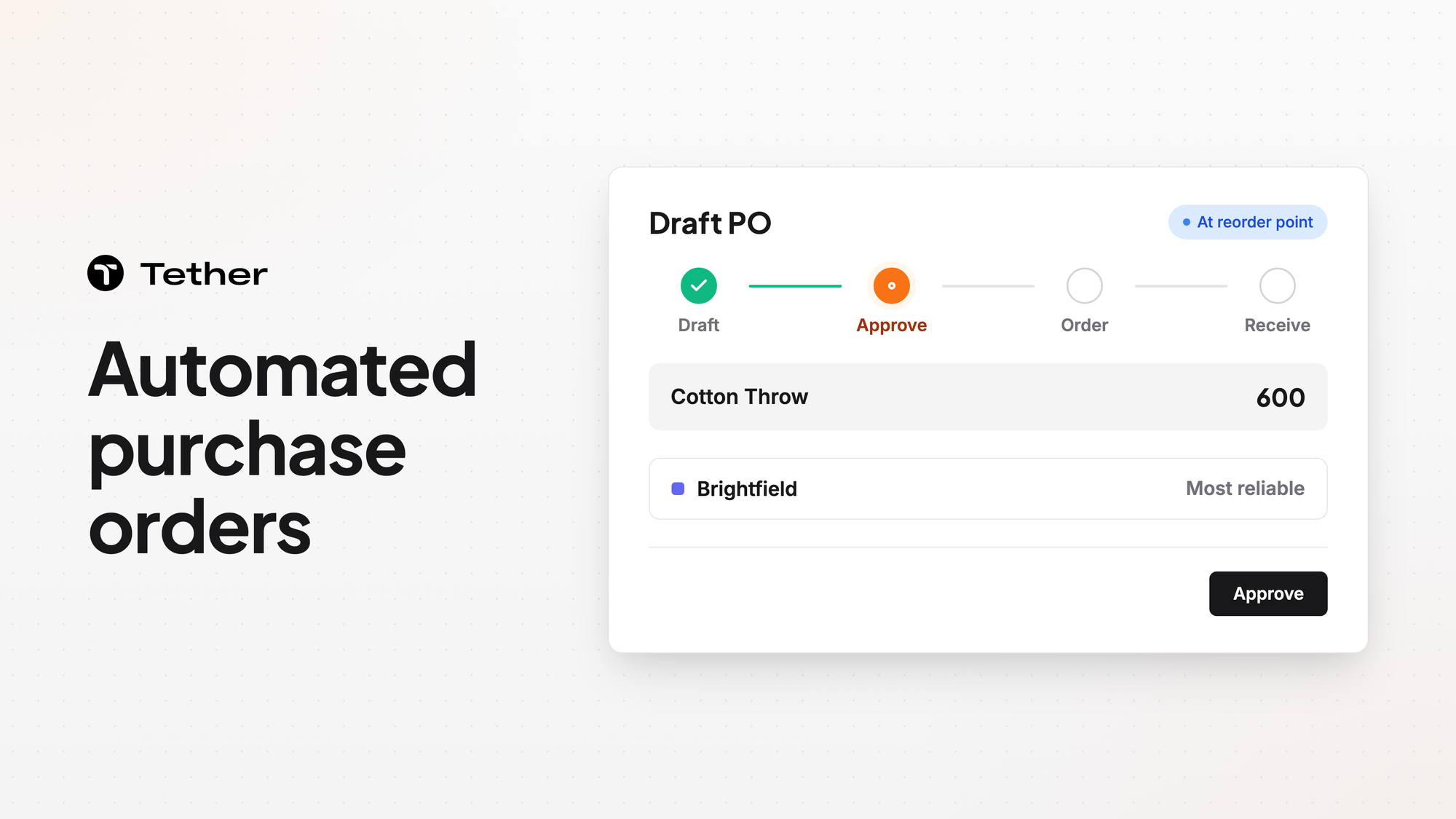
Tether auto-drafts purchase orders from your inventory needs. Each draft appears the moment your coverage hits your reorder point and already respects your supplier minimums, lead times, and preferences.
Tether drafts a purchase order once your coverage reaches your reorder point. Tether also lets you base every reorder on what suppliers have actually delivered.
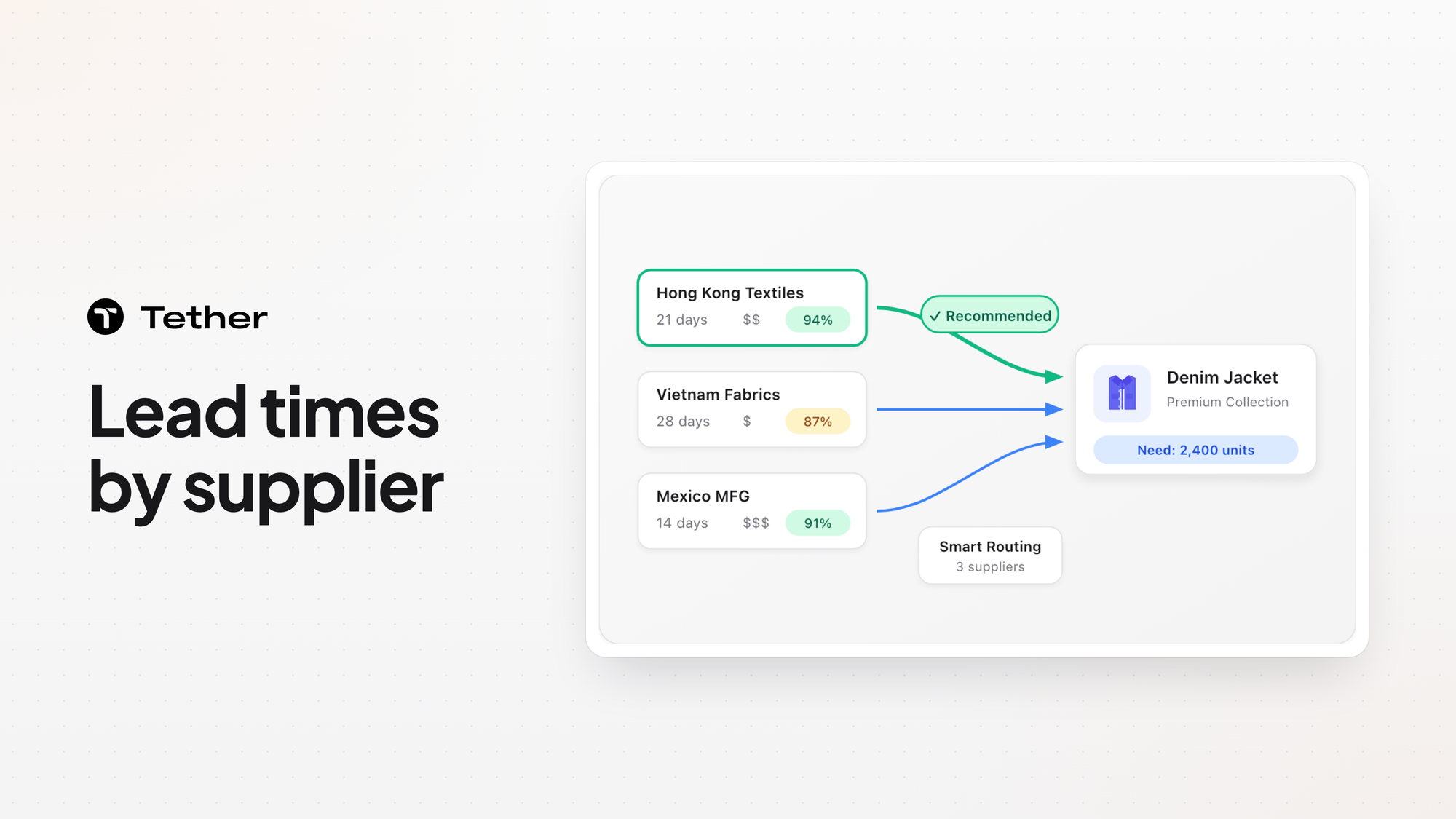
Tether keeps multiple suppliers per product, and you can draft each purchase order to your fastest, cheapest, or most reliable supplier. Tether's supply planning respects MOQs, lead times, batch sizes, and pallet counts.
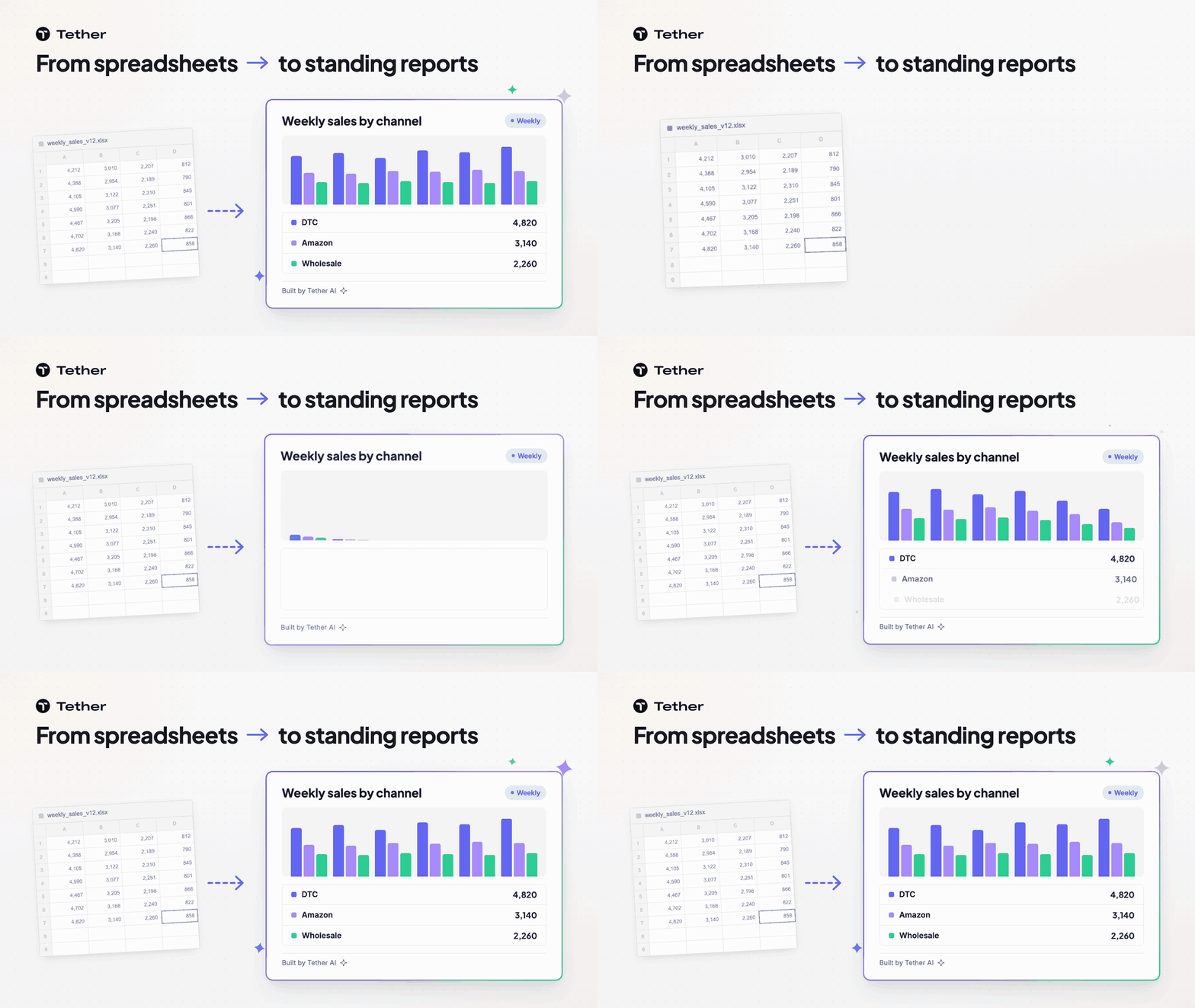
Standing reports let you ask Tether AI for a report once and stop rebuilding it by hand. Tether AI builds a custom report with tables and charts on request. It then reruns that report on a schedule such as daily, weekly, or monthly.
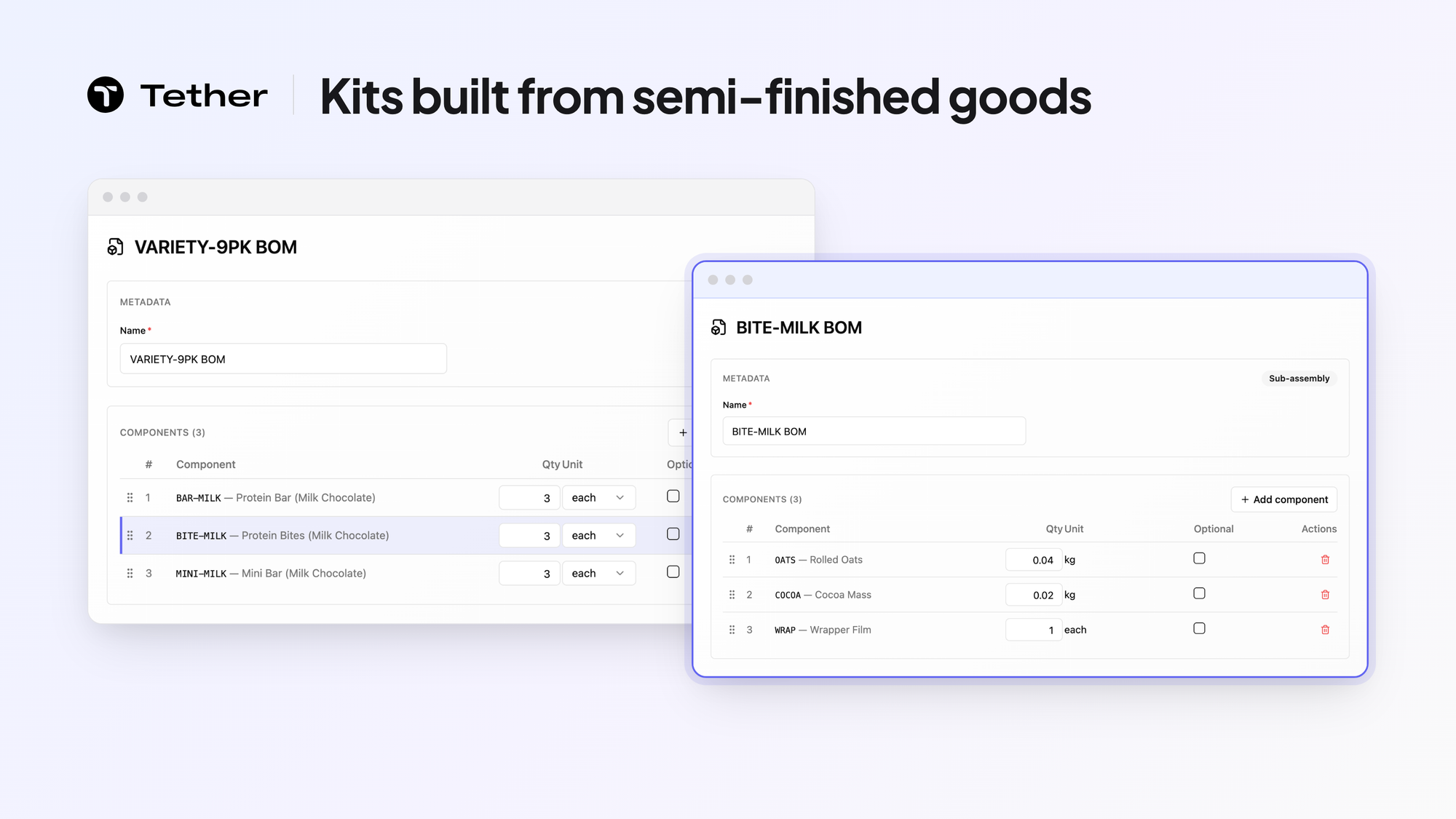
Tether supports multi-layer bills of materials (BOMs) that include semi-finished goods and kits, and new products inherit their BOM automatically. Every SKU in Tether has a type, such as finished good, component, kit, or virtual bundle.
Tether moves supply planning off spreadsheets with an implementation that typically takes mere weeks. Tether's team handles the data migration and mapping for you, and no data cleaning is required.
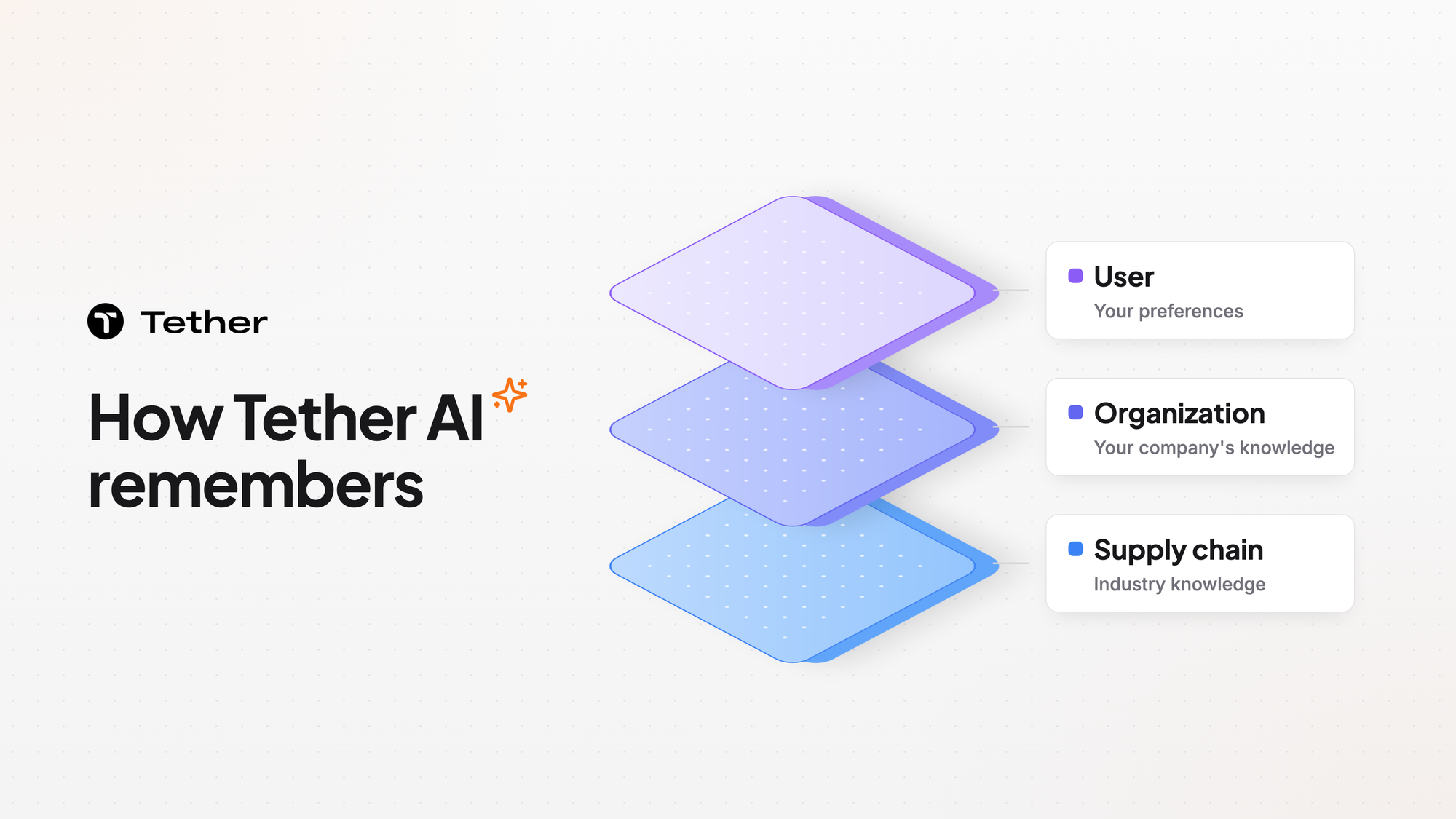
Tether AI, the in-house supply chain teammate inside Tether, keeps memory for your organization and for each user on your team. A supply chain layer knows what a SKU, a PO, a supplier, and a transfer are.
In the Tether app, Tether AI drafts POs and other changes, and each change is recorded in a visible edit log. For replenishment, it drafts purchase orders the moment coverage hits reorder and respects MOQs, lead times, batch sizes and pallet counts.
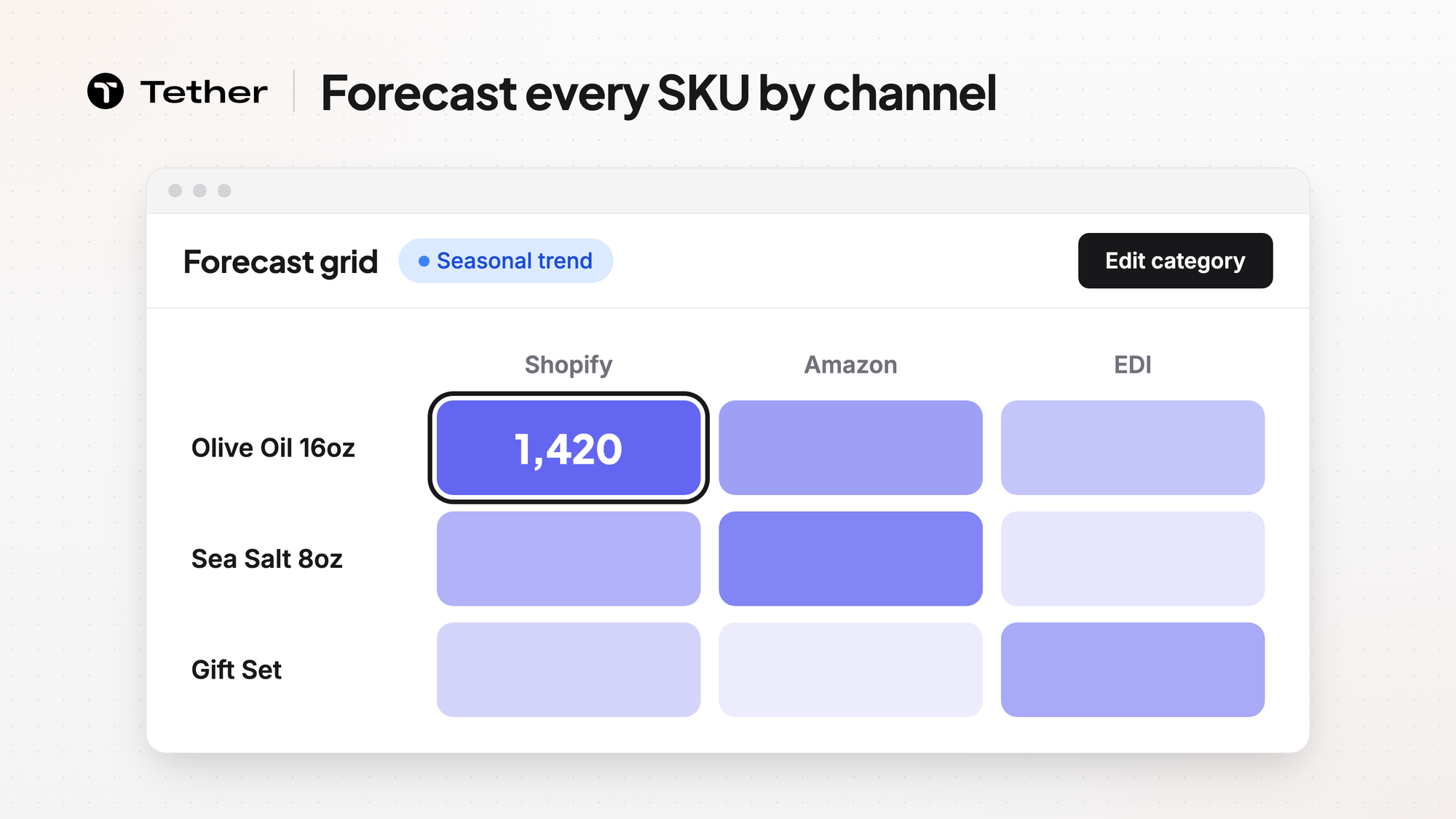
Tether forecasts demand for each SKU in each sales channel. Pre-built algorithms such as rolling averages, seasonal trends, and momentum run in the background, and different product lines can run different forecasting methods.
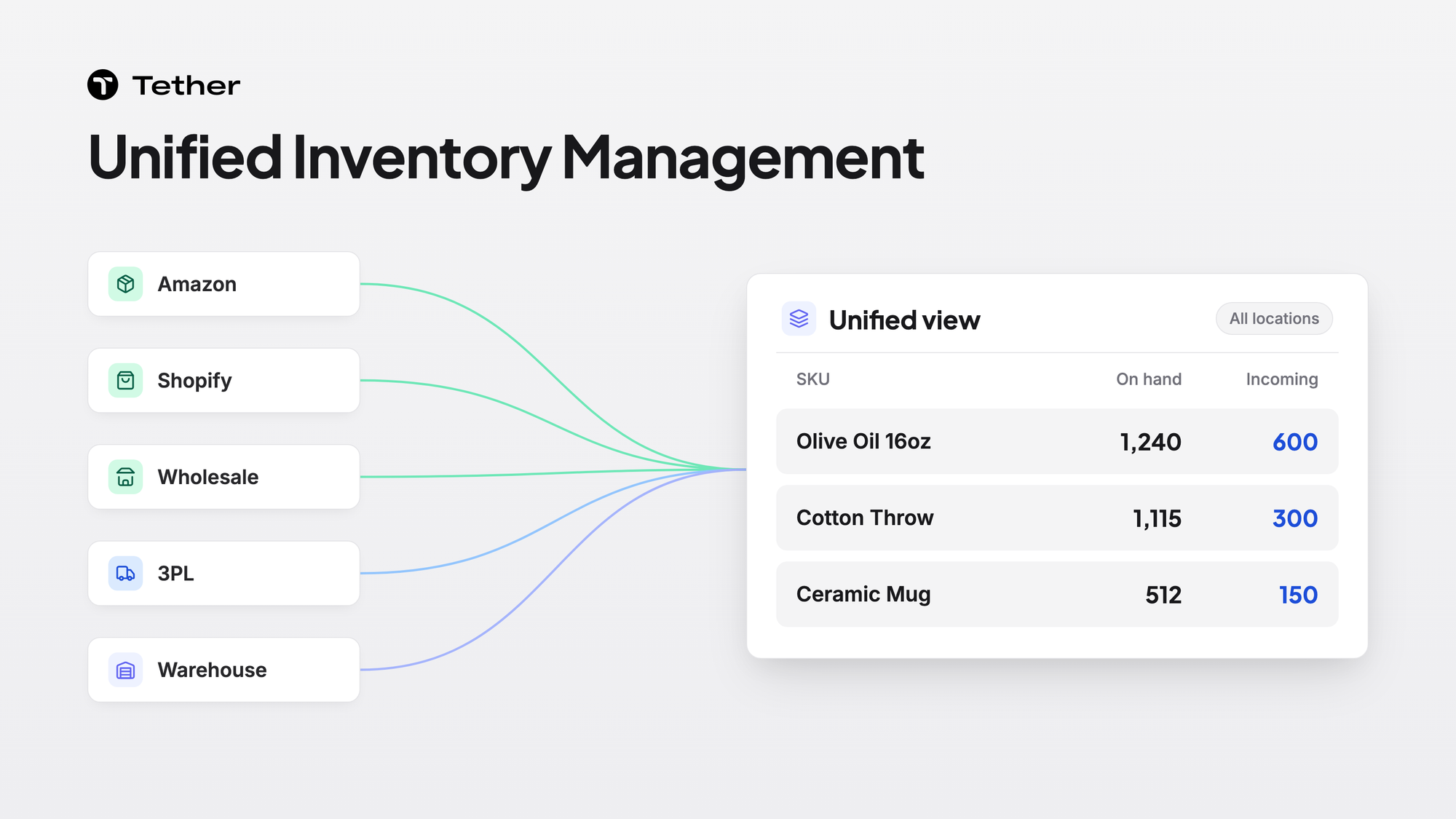
Tether pulls every sales channel, warehouse, supplier, and more into one view. Your own warehouses and your 3PLs share a single stock view. Sales data connects channel by channel or from a central ERP. Tether predicts when each SKU will stock out at each of your warehouses.
This issue talks about how Tether supports Food & Beverage brands alongside all the recent updates we've made to the platform.
Tether co-founder Gary Sahota sat down with Andrew Schundler, founder of CHUH Matcha, an RTD matcha latte brand based in Maine, to talk about the unglamorous side of CPG: forecasting with almost no history, avoiding stockouts, managing ingredient risk, & doing it all in spreadsheets.
This post breaks down why demand planning is important in the food & beverage industry, especially for longer shelf-life, pre-packaged brands and how Tether is purpose-built to be the planning system for these brands.
In this inaugural issue, we’d like to share all that we’ve been working on over the last few weeks.
Tether is excited to welcome Daryl Kato as a strategic advisor. His background as a senior leader in apparel brands like Super7, Glass House Brands, & Nissin Foods is invaluable to Tether's expansion into consumer goods.
Tether is excited to welcome Damien Huang as a strategic advisor. His background as a senior leader in apparel brands like Cotopaxi, Eddie Bauer, Patagonia, and The North Face is invaluable to Tether's expansion into the Fashion & Apparel space.
Tether is on a mission to build the best operating system for CPG operations teams, which is why we are excited to welcome Mollyanne Fleming to our advisory board. 🎉
As Tether continues to grow, it was only a matter of time before we started sharing our updates in a more public manner. We started this blog not for the typical "we must have one too" that many software companies do. This blog was started as a way to connect & share more with you. One of our core beliefs is to co-develop with "partners" (vs. building software for "customers"). This shift from customers → partners means we put our users first. Their needs & problems are at the forefront of our
Sync your eCommerce, 3PLs, Warehouses, ERPs, and other data platforms with Tether.
Plan smarter. Ship faster. Your supply chain, under control.