

What is days of cover and how should a brand use it?
 Gary Sahota
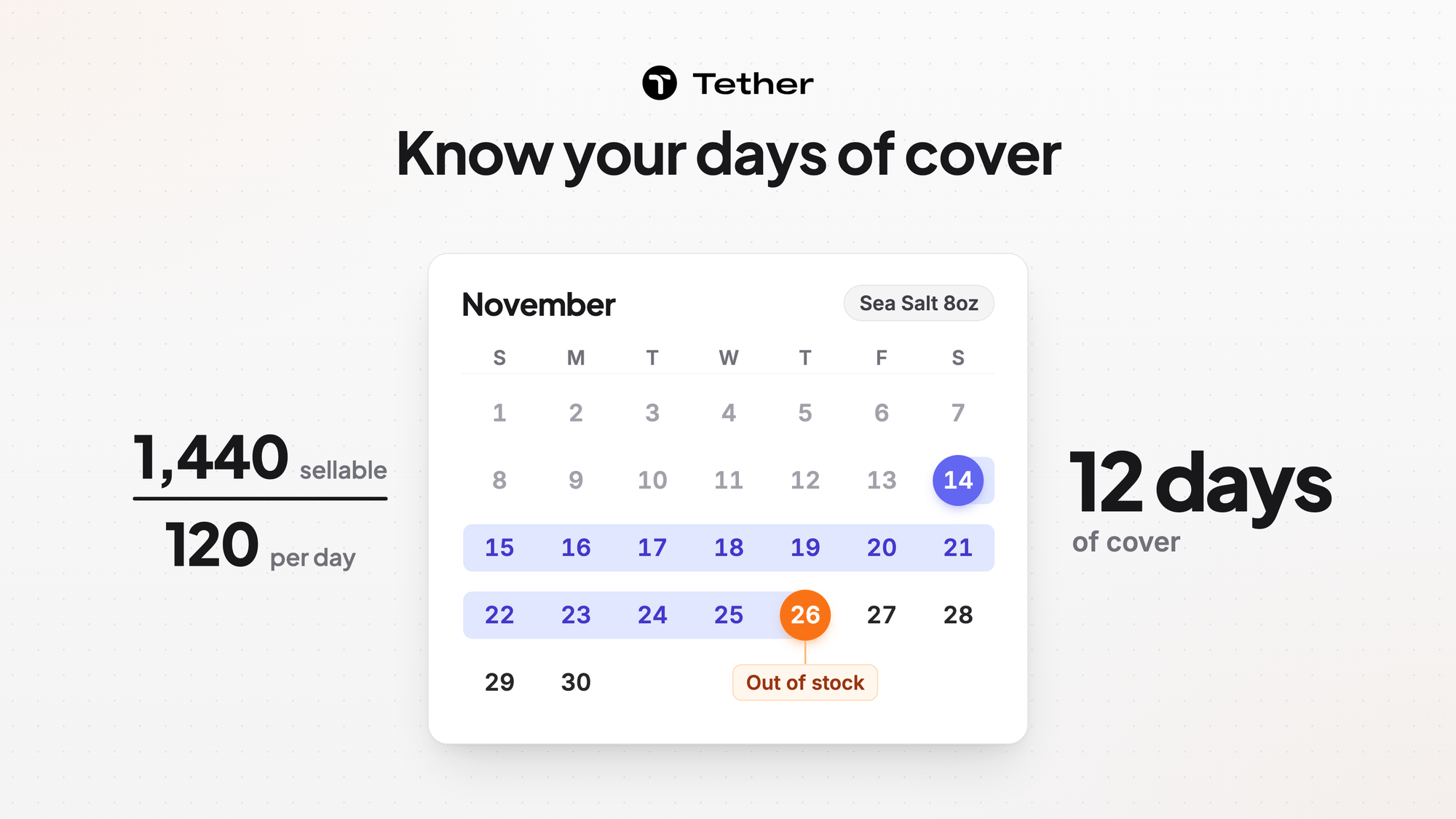
Days of cover is the number of days of stock you have left. Tether drafts a purchase order the moment your coverage hits your reorder point. It also predicts the stockout date per SKU per warehouse. A brand works out cover per SKU by dividing sellable units by expected daily sales and reorders the SKUs with the least cover first.
How to calculate days of cover
Divide the stock you can sell today by the units you expect to sell per day. The result is how long that stock lasts if demand runs as expected.
Three choices change the answer:
- Stock should be the units you can actually sell. Units already promised to open orders or held back as damaged will not cover new demand.
- Daily demand should be the rate you expect over the coming weeks. A long trailing average lags behind a season or a promotion.
- Stock already on its way needs a rule. Some teams count only what is on the shelf. Others add open purchase orders on the date they are due to land.
Write your definition down and share it with everyone who buys or plans stock. Two people who calculate cover two different ways will reach different reorder decisions for the same SKU.
How a brand should use days of cover
Use it to decide which SKUs to reorder first and where stock is piling up. A list sorted by cover from shortest to longest gives you the order of your next buying conversations.
From there the useful comparisons are these:
- Compare cover with the supplier lead time. A new order cannot land in time when a SKU has less cover than its supplier needs to deliver.
- Set your reorder point in days. A common approach is the supplier lead time plus a buffer for late deliveries and demand swings.
- Set a ceiling as well. Cover that runs far past your next few reorders ties up cash in stock you do not need yet.
Where days of cover can mislead you
The number is only as good as the demand rate behind it. Four situations make it look healthier or worse than it is:
- Past stockouts pull the average down. Days with no stock record no sales and make demand look smaller than it was.
- Seasons and promotions change the rate. Cover calculated on a quiet month runs out fast in a busy one.
- Totals hide local gaps. A healthy brand-wide figure can sit on top of one warehouse that is about to run out.
- Lead times drift. Cover that looks safe against a quoted lead time is not safe when the supplier is running late.
Treat cover as a prompt to look closer. The fix is usually a better demand rate or a check at the location level.
What Tether does when coverage runs low
When coverage hits your reorder point the draft that appears already respects your supplier minimums, lead times, and preferences.
You can follow every order from draft to delivery in purchase order management. You get flagged the moment a delivery date slips, long before it becomes a stockout.
The lead time side of the comparison matters too. In supply planning you can base every reorder on what suppliers have actually delivered. You can also spot trends in past lead times and set expectations you can keep.
FAQ
Is days of cover the same as weeks of cover?
They measure the same thing in different units. Weeks of cover divides the same stock by weekly sales instead of daily sales. Teams with long supplier lead times often find weeks easier to read.
What is a good days of cover target?
There is no single right target for every SKU. A SKU with a short and reliable lead time can run on less cover than one with a long or unreliable lead time. Set the target per SKU rather than one figure for the whole catalog.
How is cover different from inventory turnover?
Turnover measures how many times your stock sold through over a past period. Cover estimates how long the stock you hold today will last. Inventory managers often track both.
Does Tether reorder on its own when coverage runs low?
When Tether predicts a stockout it recommends a purchase or transfer. Nothing is ordered until someone on your team accepts it and places the order.


