

How Tether tracks inventory across warehouses, 3PLs, and sales channels
 Gary Sahota
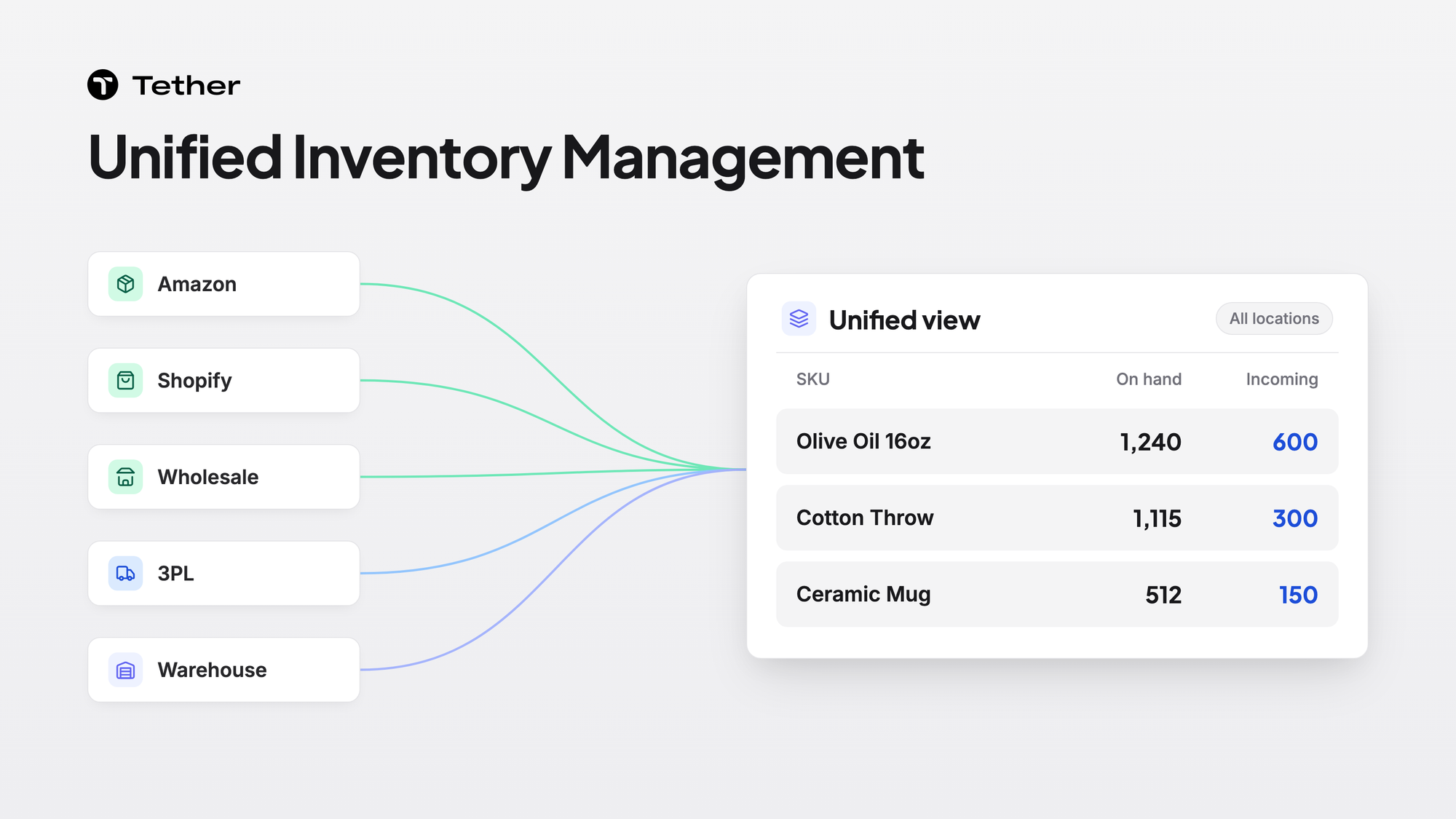
Tether pulls every sales channel, warehouse, supplier, and more into one view. Your own warehouses and your 3PLs share a single stock view. Sales data connects channel by channel or from a central ERP. Tether predicts when each SKU will stock out at each of your warehouses.
The whole network sits in one stock view
Tether unifies your own warehouses and 3PLs into one stock view. Start there when your question is about the business as a whole rather than one building.
Your sales channels and suppliers come into Tether alongside your warehouses, so each team sees what matters to it. With inventory management in Tether you get real-time visibility into stock health and can optimize allocation across warehouses and channels.
Below the network level, Tether works SKU by SKU and location by location.
Each SKU gets a stockout date at each location
Tether predicts the stockout date for each SKU at each warehouse. The example below shows one SKU at each of its locations. Its top row is the network total, and each row below it is one location.
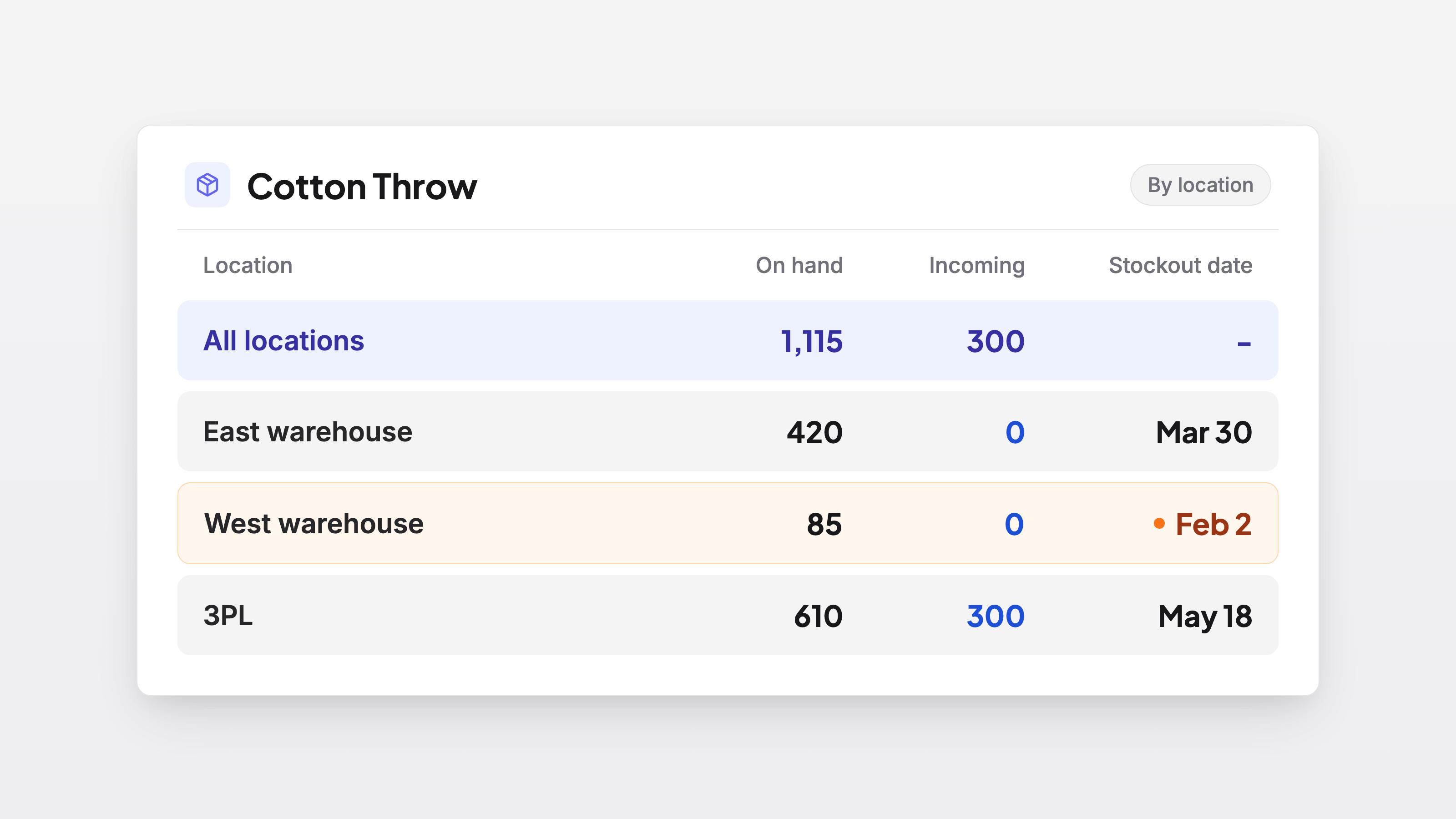
In this example the network as a whole holds plenty of Cotton Throw while the West warehouse is close to running out. A single date for the whole network would hide that, while a date for each location shows which warehouse needs attention first.
Coverage weighs demand and incoming POs together, so stockouts get flagged while you can still act.
Rules and transfer recommendations work by location
Each warehouse location can have its own custom rules that you set, so one site does not have to copy the setup of another. Tether uses a reorder point to show when to trigger a reorder. Tether makes transfer recommendations between your locations.
Each channel maps to a default warehouse and has its own forecast
Map each channel to its default warehouse so Amazon fulfills from one location while DTC can fulfill from another.
Tether's demand planning forecasts demand for each SKU in each sales channel. Planners can group and filter the forecast grid by channel or SKU.
FAQ
Does this work if we run a single warehouse today?
With a single warehouse, Tether still predicts the stockout date for each SKU there. Add a 3PL or a second warehouse and its stock sits in the same stock view as the first. The location-by-location detail matters more as your network grows.
Do we need an ERP to bring in sales data?
You can connect sales data channel by channel from Shopify, Amazon, and EDI. If your sales already run through a central ERP, Tether can take the data from there instead.
How does Tether follow stock that is still on the way?
Tether auto-drafts purchase orders from inventory needs and tracks each one from draft to receipt. It keeps them in sync with your ERP and shows how incoming stock affects your forecast. If a shipment slips, the forecast updates on its own.
Does a stockout prediction place an order by itself?
When Tether predicts a stockout, it triggers replenishment. That trigger is a recommendation for your team to act on, not an order placed on its own.


