

What is landed cost and why does it matter for reorder decisions?
 Gary Sahota
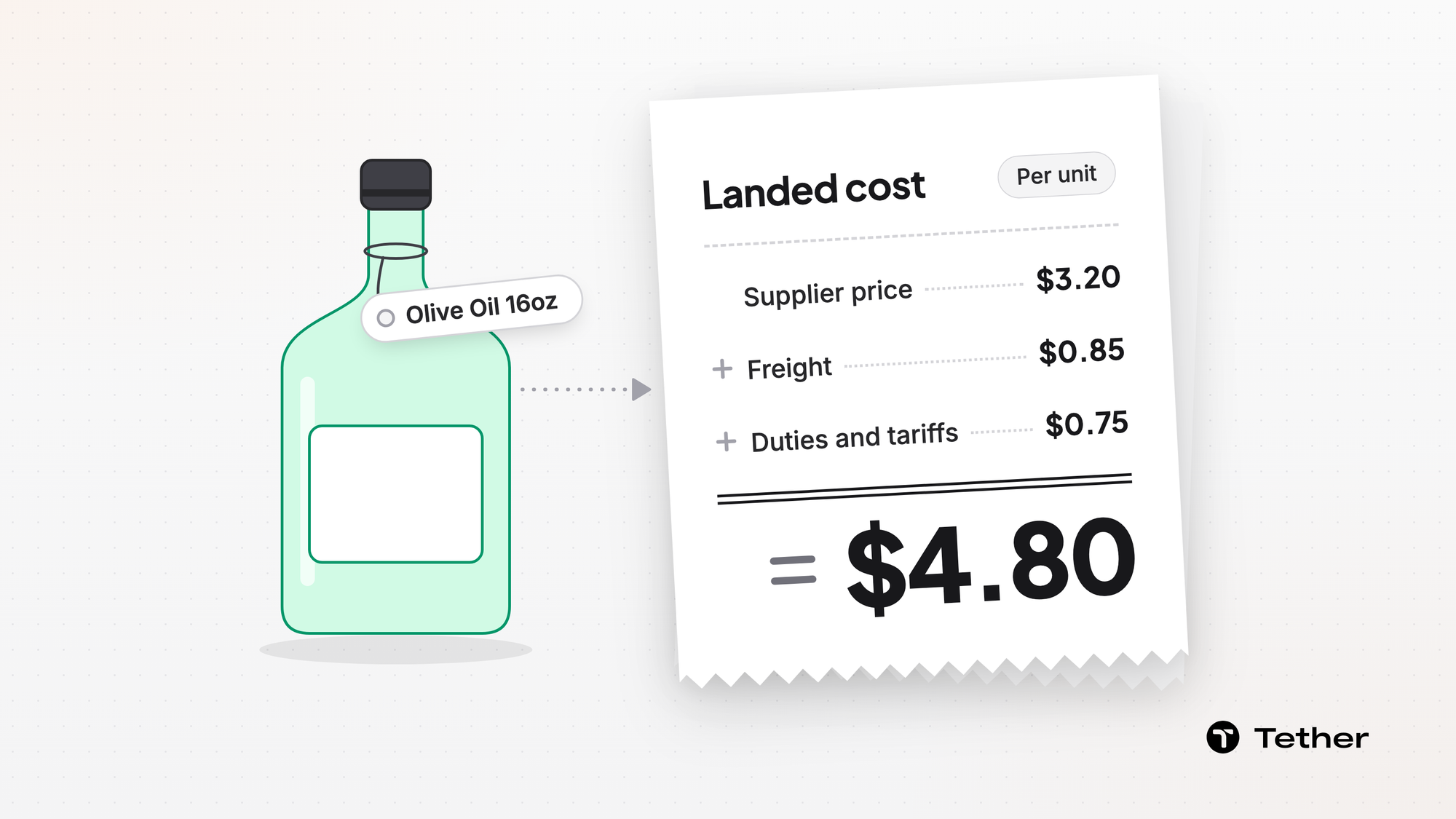
Landed cost is the supplier price of a unit plus the cost of bringing it in. Tether calculates per-unit landed cost with freight, duties, and tariffs. Landed cost matters for reorder decisions because the cheapest quote is not always the cheapest unit once it reaches your warehouse. Purchase orders in Tether arrive drafted.
What goes into landed cost
Landed cost starts with the supplier price and adds every cost of moving the goods to the warehouse you sell from. Teams usually group those costs like this:
- Product cost is the price on the supplier invoice for the units you ordered.
- Freight covers the main shipment by sea, air, or truck and the delivery from the port to your warehouse.
- Duties and tariffs are the charges a country sets on imported goods.
- Import fees cover customs brokerage, port handling, and any inspection the shipment needs.
- Insurance protects the goods while they are in transit.
Brands that buy from domestic suppliers still have a landed cost. For them it is mostly freight and handling rather than duties.
How to spread shared costs across units
Split each shared bill across the units it covers by the measure that drives that cost. Most shipping and import costs arrive as one bill for a whole shipment. You need to divide that bill up before you know what one unit cost.
- Split by units when the products in a shipment are similar in size and value.
- Split by weight or volume when freight is the main cost and the products differ in size.
- Split by value for duties and tariffs that are set as a share of what the goods are worth.
Pick one method for each type of cost and keep it. A landed cost that changes method from one shipment to the next is hard to compare over time.
Why landed cost changes reorder decisions
Landed cost changes which supplier looks cheapest, how much you order, and what margin you plan around. A reorder based on the quoted price alone understates what the order will cost you.
- A supplier with a lower quote can cost more per unit once the goods land if it ships from farther away or faces a higher tariff. Compare suppliers on landed cost rather than on the price they quote. Weigh it alongside supplier lead times because a cheaper unit that arrives late can still cost you a stockout.
- Some freight and import fees are charged per shipment. A larger order spreads them across more units. It also ties up more cash and more space in your warehouse.
- A tariff change or a jump in freight rates can move landed cost between one order and the next. Check the figure again before each large purchase rather than reusing an old number.
- Prices and promotions planned on the supplier price alone overstate the margin on every unit you sell.
Landed cost and true cost per unit in Tether
Tether describes the cost of a unit in two ways that list different costs. The landed cost calculation covers freight, duties, and tariffs.
Tether also gives you true cost per unit on every product - shipping, packaging, bundling, and labor included, not just materials.
Suppliers and orders in Tether
Tether lets you keep multiple suppliers per product without losing track of who delivers what. You can split orders across suppliers by your own rules. In supply planning you can draft each PO to your fastest, cheapest, or most reliable supplier.
FAQ
Is landed cost the same as cost of goods sold?
No. Landed cost is what it took to bring a unit into your warehouse. Cost of goods sold usually carries each unit's landed cost into the period in which that unit sells.
Which costs sit outside landed cost?
Costs that arrive after the goods land usually sit outside it. Warehouse storage, pick and pack work for customer orders, outbound shipping to customers, and marketing belong to other cost lines.
How often should you update landed cost?
Recalculate it for each shipment once its freight and import bills arrive. Keep the earlier figures too so you can see how each supplier's landed cost moves over time.


