

How does Tether Data help prevent stockouts and overstock across multiple warehouse locations?
 Gary Sahota
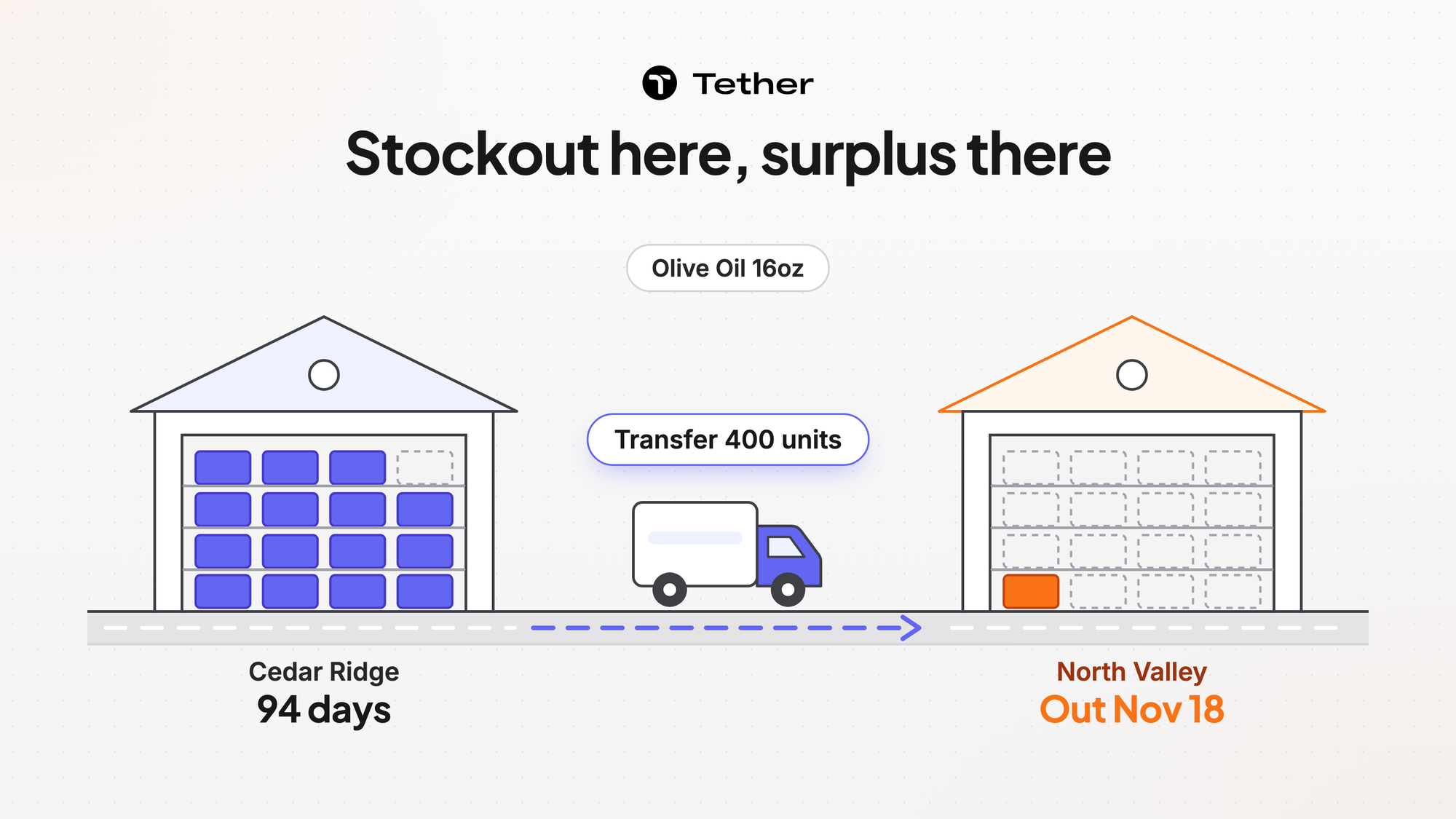
Tether predicts the stockout date for each SKU at each warehouse and recommends a purchase or transfer. It also recommends reducing or cancelling a purchase, production run, or transfer you no longer need. A recommendation becomes an order only when someone on your team places it.
Your team decides what gets ordered
When Tether predicts a stockout, your team decides what gets ordered. Someone on your team accepts a recommendation to add it to your plan. Placing the order is a separate step by default.
One stock view covers your warehouses and 3PLs
Your own warehouses and 3PLs sit in one stock view in inventory management. A 3PL or WMS connection brings sales orders, inventory levels, and purchase orders into Tether.
Coverage weighs demand and incoming POs together, so stockouts get flagged while you can still act. Coverage means the days of stock you have left. Purchase order drafts appear the moment your coverage hits your reorder point.
Surplus in one warehouse can cover a shortage in another
A transfer between warehouses moves stock you already own to the warehouse running short. Tether ranks its transfer recommendations by urgency, alongside the POs and production runs it recommends.
Supplier rules shape each order
Tether respects MOQs, lead times, batch sizes, and pallet counts for each supplier. It also routes orders across more than one supplier.
In supply planning you can build in packaging rules so orders arrive ready for your warehouse.
Tether AI drafts changes in the Tether app
Tether AI drafts POs and other changes in the Tether app, and your team decides which ones to apply. The app records each of those changes in a visible edit log that shows who, what, why, before, and after.
The Tether AI page covers drafted changes and the edit log.
FAQ
What happens when a supplier shipment runs late?
You get flagged the moment a delivery date slips, long before it becomes a stockout. When a shipment slips, your forecast updates on its own.
Does Tether calculate landed cost per unit?
Tether calculates per-unit landed cost with freight, duties, and tariffs. Landed cost adds those charges to what you pay the supplier for each unit.
Do I need to clean my data before Tether can predict stockouts?
No data cleaning is required. The Tether team handles the data migration and mapping for you.


